Deloitte’s 2026 India Forecast Highlights Resilient Growth Amid Global Headwinds
- admin
- April 2, 2026
- Uncategorized
- 0 Comments
Deloitte’s January 2026 economic outlook positions India as a relative outperformer among major economies, projecting sustained GDP growth above 6.5% despite persistent global uncertainty. The assessment underscores India’s domestic consumption engine and infrastructure spending as primary growth drivers while flagging external trade vulnerabilities and inflation management as key risks.
New Delhi, April 2026 — India enters 2026 with its macroeconomic fundamentals largely intact, according to Deloitte’s latest economic outlook, which arrives at a critical juncture when advanced economies continue grappling with sluggish recovery and geopolitical fragmentation reshapes global trade corridors.
What Is Driving India’s Economic Resilience?
India’s growth trajectory remains anchored in robust private consumption, which constitutes approximately 60% of GDP, and accelerated public capital expenditure that has averaged over ₹10 lakh crore annually since FY24. The manufacturing sector’s expansion under Production-Linked Incentive schemes has begun yielding measurable output gains, particularly in electronics and pharmaceuticals. Services exports, especially in IT and business process management, continue providing current account stability despite merchandise trade deficits.
What Does This Mean for India’s Policy Framework?
The Reserve Bank of India faces a delicate balancing act between supporting growth momentum and anchoring inflation expectations within the 4% target band. Deloitte’s assessment suggests monetary policy will remain data-dependent, with rate adjustments contingent on core inflation trends and rupee stability. Fiscal consolidation efforts targeting a deficit below 5% of GDP by FY27 impose constraints on additional stimulus measures, placing greater emphasis on crowding-in private investment through regulatory reforms.
How Does India Compare Globally?
India’s projected growth rate positions it as the fastest-growing major economy, outpacing China’s estimated 4.5% expansion and significantly exceeding anaemic growth in the Eurozone and United Kingdom. The last time India maintained such a pronounced growth differential was during the 2003-2008 boom, which preceded substantial foreign capital inflows. However, India’s per-capita income trajectory requires sustained 7%+ growth for decades to achieve middle-income convergence with East Asian peers.
- India’s GDP growth projected at 6.5-6.8% for calendar year 2026, per Deloitte estimates
- Private consumption growth expected to exceed 7% year-on-year
- Infrastructure capital expenditure targets maintained above ₹11 lakh crore for FY27
- Current account deficit projected at manageable 1.5-2% of GDP range
- Foreign exchange reserves providing import cover exceeding 10 months
What Should Investors Watch?
Portfolio managers should monitor three variables closely: the trajectory of US Federal Reserve policy affecting emerging market capital flows, crude oil price movements given India’s 85% import dependence, and the pace of domestic credit growth as a leading indicator of investment revival. Corporate earnings momentum in banking and infrastructure sectors will provide early signals of whether Deloitte’s optimistic baseline materialises.
Analyst’s View
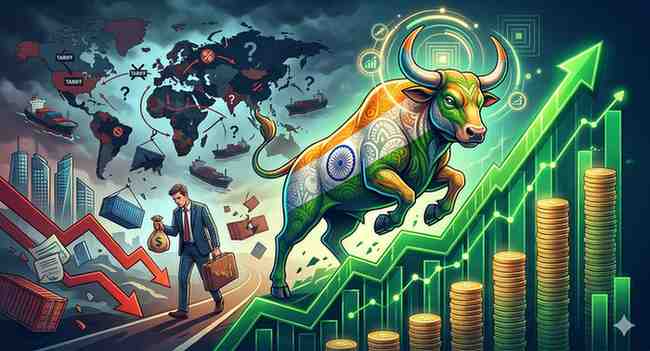
India’s economic outlook for 2026 reflects structural strengths that have been years in the making — demographic dividend, digitisation depth, and diversifying manufacturing base. The critical unknown remains external: a sharper global slowdown or sustained commodity price spikes could compress India’s growth premium significantly. Investors should position for continued outperformance while hedging against scenarios where global risk-off sentiment triggers capital flight from emerging markets regardless of domestic fundamentals.