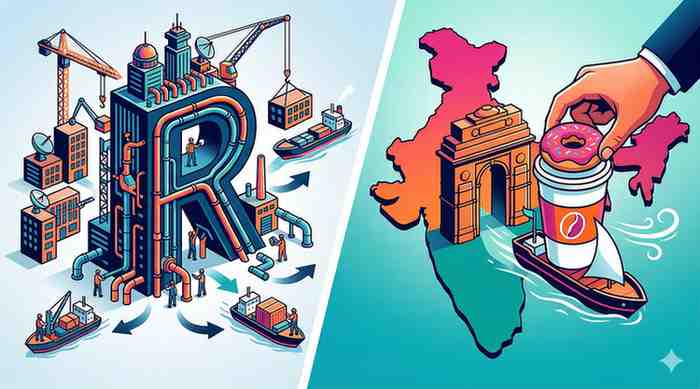
Corporate Shifts: Reliance Slims Down; Dunkin’ Donuts Exits India
- Editor
- April 6, 2026
- Uncategorized
- 0 Comments
Mumbai/New Delhi, April 2026 — The landscape of Indian retail and tech is undergoing a massive restructuring as the country’s largest conglomerates and most high-profile unicorns move to cut underperforming assets. From the sudden termination of nearly a thousand physical stores to the exit of a global breakfast giant, the current corporate mantra is clear: shed the dead weight and double down on what works.
Reliance Retail: The 950-Store Purge
In a move that marks the final chapter of the Future Group saga, Reliance Retail has terminated the leases of 950 stores it had previously occupied. These outlets, which include legacy brands like Big Bazaar and Easyday, once formed the backbone of India’s organized retail, contributing 55–65% of the revenue in that segment.
The Strategy Behind the Shutdown:
Industry insiders suggest this isn’t a retreat, but a pivot. Reliance is moving away from the high-maintenance legacy formats of the past and toward an “online-first” architecture. By vacating these physical spaces, Reliance is freeing up capital to bolster JioMart and its quick-commerce capabilities. Many of these prime locations are expected to be converted into “dark stores” or high-efficiency fulfillment centers that prioritize app-based deliveries over walk-in customers.
Dunkin’ Donuts: A Bittersweet Departure
Jubilant FoodWorks (JFL) has signaled the end of its decade-long experiment with American breakfast in India. The company is set to exit the Dunkin’ Donuts master franchise by the end of 2026.
Despite repeated attempts to rebrand Dunkin’ as a “donuts and coffee” destination, the brand struggled to compete with India’s traditional breakfast habits and the rising “cafe culture” dominated by local players. JFL will now funnel its resources into Domino’s, which remains a market leader, and Popeyes, which is seeing explosive growth in the fried chicken segment. For JFL, the math was simple: it was time to stop subsidizing a niche donut brand and invest in the high-volume “chicken and pizza” wars.
The Gupshup Crash: A Unicorn’s 80% Haircut
The tech sector is facing its own reality check, evidenced by the dramatic devaluation of Gupshup. Once valued at a soaring $1.4 billion, the conversational AI firm’s valuation has plummeted to an estimated $280–$300 million.
The Bursting of the SaaS Bubble:
- Valuation Correction: Investors are no longer rewarding high-growth startups that lack a clear path to massive profitability.
- Competitive Squeeze: The entry of tech giants offering native messaging solutions has commoditized the space Gupshup once dominated.
- Investor Sentiment: This 80% markdown reflects a broader trend where “paper wealth” in the Indian startup ecosystem is being replaced by hard financial scrutiny.
Summary of Major Corporate Pivots
| Company | Key Action | Implied Strategy |
| Reliance Retail | Closed 950 stores | Transition to quick-commerce and digital fulfillment. |
| Dunkin’ Donuts | Franchise Exit | Exiting low-margin niche markets to focus on Popeyes. |
| Gupshup | 80% Valuation Cut | Realignment of tech valuations with actual profitability. |
Bottom Line
The headlines of 2026 are no longer about who can open the most stores or reach the highest valuation. They are about who can survive a tightening market. Reliance is trading physical floor space for digital speed, Jubilant is trading donuts for chicken, and the tech sector is finally acknowledging that a “unicorn” status is meaningless without sustainable margins. The era of the “growth at any cost” bubble has officially burst.