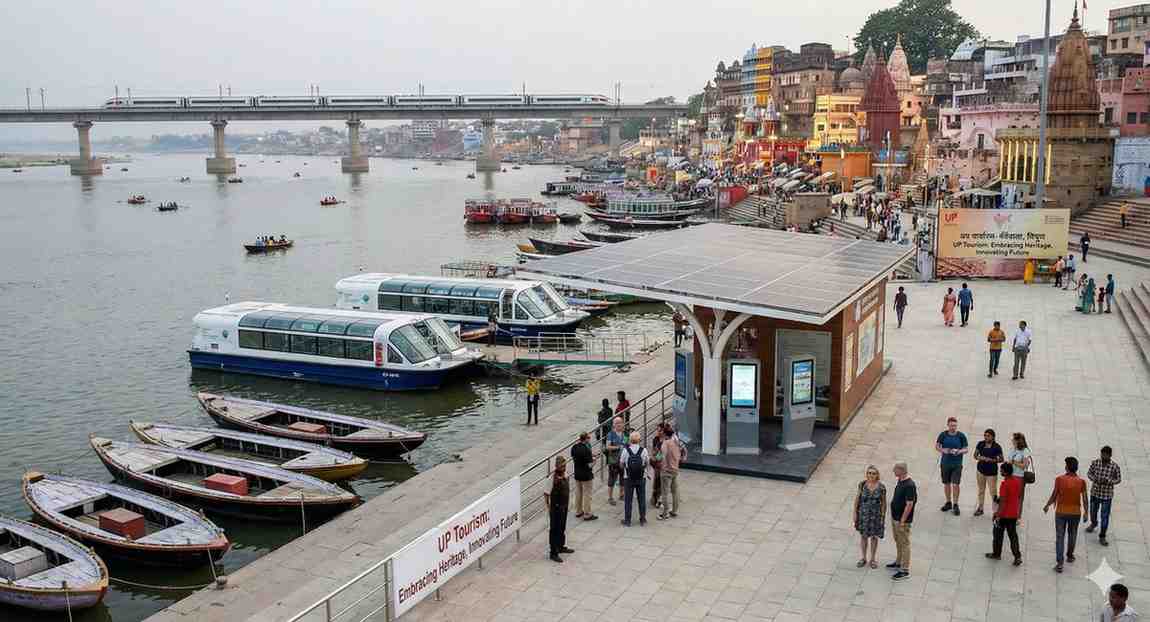
The Future of Tourism in Uttar Pradesh: Are We Truly Capitalizing on Our Heritage?
Heritage Meets Opportunity
Uttar Pradesh, a land steeped in cultural and spiritual significance, is increasingly drawing global and domestic tourists alike. With its sacred ghats, timeless temples, and majestic monuments, the state has firmly positioned itself as one of India’s top tourist destinations. But as tourism surges, a critical question emerges: Are we fully harnessing our rich heritage to shape a sustainable and inclusive future for Uttar Pradesh’s tourism sector?
Tourism Boom: Ayodhya Takes the Spotlight
In 2024, Ayodhya emerged as the most visited city in Uttar Pradesh, surpassing even Agra, home to the world-renowned Taj Mahal. Recent figures show Ayodhya welcomed a staggering 135.5 million domestic visitors between January and September, buoyed by the much-anticipated completion of the Ram Mandir. This remarkable achievement underscores the growing prominence of spiritual tourism in the state.
Meanwhile, Varanasi, the eternal city of spirituality, recorded over 62 million domestic visitors and around 184,000 international tourists during the same period. The ghats of Varanasi and the famous Kashi Vishwanath Corridor have transformed the city into a vibrant spiritual and cultural hub.
Mathura, the birthplace of Lord Krishna, attracted 68 million visitors, further solidifying its role as a magnet for religious tourism. Similarly, Prayagraj, known for the Kumbh Mela and its sacred confluence of rivers, saw 48 million visitors, cementing its place as a pilgrimage hotspot.
Agra, though slightly overshadowed by Ayodhya’s rise, remains an enduring symbol of architectural brilliance, drawing millions annually to marvel at the Taj Mahal.
The State’s Strategy: Transforming Potential into Progress
1. Policy Frameworks Driving Growth
The Uttar Pradesh Tourism Policy 2022-2032 has been instrumental in expanding the state’s tourism horizons. It focuses on integrating lesser-known destinations into the mainstream, improving infrastructure, and creating thematic tourism circuits that appeal to diverse traveler interests.
2. One District One Product (ODOP)
ODOP has infused new life into local craftsmanship by showcasing unique products like Varanasi’s silk, Moradabad’s brassware, and Agra’s leather goods. This initiative not only boosts tourism but also empowers local artisans and businesses.
3. Cultural and Spiritual Circuits
Projects like the Ram Van Gaman Path, tracing Lord Rama’s journey, and the Buddhist Circuit, which links key locations from Lord Buddha’s life, are enhancing thematic tourism experiences. These circuits aim to attract both domestic pilgrims and international spiritual seekers.
Challenges on the Road Ahead
1. Infrastructure Gaps
While cities like Ayodhya and Varanasi are thriving, many smaller towns and rural destinations still lack adequate infrastructure, including reliable transportation, accommodations, and public amenities.
2. Balancing Growth and Preservation
Tourism often brings the risk of over-commercialization. Striking a balance between welcoming visitors and preserving the authenticity of heritage sites is critical. Without sustainable practices, the state risks degrading its cultural treasures.
3. Promoting Lesser-Known Destinations
Despite major successes, regions with rich yet underexplored heritage remain on the periphery. Destinations like Chitrakoot and Shravasti, brimming with cultural significance, need greater promotion and investment.
What Lies Ahead?
1. Sustainable Tourism Development
To prevent overburdening key destinations, the government must emphasize eco-friendly and sustainable practices. Measures such as limiting visitor numbers, using renewable energy, and promoting green transport at heritage sites can ensure long-term sustainability.
2. Digital Integration for Smart Tourism
Integrating digital tools like augmented reality (AR) for virtual heritage tours and real-time visitor management systems can enhance the overall experience while preserving the integrity of sites.
3. Public-Private Partnerships (PPP)
Engaging private players to develop world-class infrastructure and promote niche tourism can fast-track Uttar Pradesh’s transformation into a global tourism hub.
4. Empowering Local Communities
Tourism should be inclusive, with tangible benefits trickling down to local communities. Empowering residents through training, employment opportunities, and cultural promotion ensures long-term impact and sustainability.
Conclusion: A World-Class Heritage Destination in the Making
Uttar Pradesh stands at the cusp of a tourism revolution. Ayodhya’s meteoric rise as the most visited city, coupled with the timeless allure of Varanasi, Prayagraj, and Mathura, underscores the state’s potential to become a global leader in heritage and spiritual tourism.
Yet, to truly capitalize on this momentum, the state must address its challenges with creativity and commitment. By balancing preservation with progress, and inclusivity with innovation, Uttar Pradesh can transform its rich heritage into a sustainable asset that enriches not only its economy but also its cultural legacy.
The question remains: Will Uttar Pradesh rise to this challenge and cement its place as a beacon of global tourism, or will it falter under the weight of unfulfilled potential? The answer lies in the road ahead.