The Secondary Shock: How Energy Tensions are Inflating the Indian Household Bill
- Editor
- March 23, 2026
- Business Trends, Companies & Industry, Development, Energy & Environment, Technology
- 0 Comments
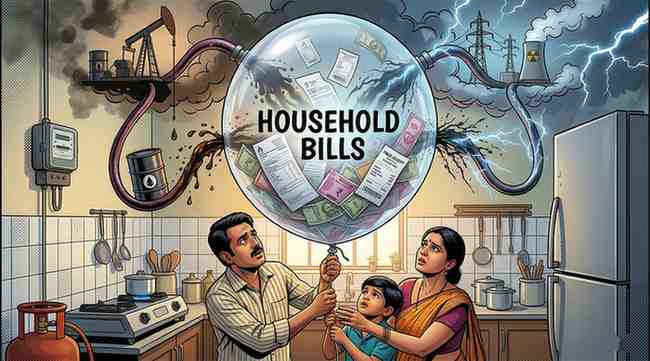
NEW DELHI, March 23, 2026 — While global headlines focus on the 48-hour ultimatum in the Persian Gulf, the Indian consumer is already fighting a different kind of war: the war of rising costs. Despite strategic oil deals with the U.S. and Russia, the “secondary costs” of the energy crisis—the fuels and materials used in manufacturing—are hitting the shelves with a vengeance.
From the water we drink to the medicines we rely on, the “hidden” petroleum footprint in India’s economy is now exposed, creating an inflationary wave that no government subsidy has yet been able to fully absorb.
The Plastic Tax: 11% Surge in Bottled Goods
It’s not just the liquid inside the bottle that’s becoming expensive; it’s the bottle itself. Packaged water prices have risen by 11% this month, driven by a global shortage of Polyethylene Terephthalate (PET).
- The Petro-Connection: Plastic granules (PET), a direct derivative of petroleum, have seen supply lines choked by the Hormuz blockade.
- The Packaging Trap: For FMCG companies, packaging is a major cost component. With granule prices soaring, manufacturers of everything from beverages to detergents are passing the “plastic tax” directly to the consumer. For millions of Indians, a basic bottle of water is now a visible marker of a conflict thousands of miles away.
Logistics Under Fire: The ₹109 Industrial Diesel Crisis
The “arteries” of the Indian economy—its trucks and freight trains—are facing a massive cardiac event. Indian Oil Corporation (IOC) has raised the price of industrial diesel by 25%, pushing bulk rates from ₹87.57 to over ₹109 per liter.
- Why It Matters: Unlike retail diesel at the pump, which is often managed for political stability, industrial diesel is sold to bulk buyers like transport fleets and factories.
- The Domino Effect: A 25% hike in fuel costs means that logistics companies must increase freight charges. This makes the transport of essential commodities like grains, cement, and steel more expensive, ensuring that this price hike will eventually hit every corner of the Indian market.
The Pharma Squeeze: A Threat to Generic Medicine
India’s status as the “Pharmacy of the World” is facing its toughest test in a decade. The cost of producing generic medicines has reached a critical boiling point as raw material prices for pharmaceutical manufacturing have doubled overnight.
- The Solvent Crisis: Many Active Pharmaceutical Ingredients (APIs) and Key Starting Materials (KSMs) require petroleum-based solvents for synthesis.
- The Margin Crunch: Generic drug manufacturers, who operate on high volumes and thin margins, cannot absorb a 100% increase in input costs. Industry experts warn that if the crisis persists, the availability of affordable chronic-care medicines—for heart disease, diabetes, and infections—could be significantly compromised.
Consumer Impact Snapshot (March 2026)
| Category | Primary Cost Driver | Direct Impact |
| Drinking Water | PET Plastic Granules | 11% Price Hike |
| Heavy Logistics | Industrial Diesel (Bulk) | 25% Price Hike (₹109/L) |
| Healthcare | Petroleum Solvents & APIs | 100% Rise in Input Costs |
| Packaged Food | Transport & Packaging | 8–10% Rise in Shelf Price |
Bottom Line
The current geopolitical crisis has proven that energy security is not just about the price at the petrol pump. It is a fundamental ingredient in our plastics, our logistics, and our healthcare. As industrial diesel crosses the ₹109 mark and plastic costs continue to climb, India faces a daunting challenge: how to keep the economy moving when the basic building blocks of production are becoming unaffordable.