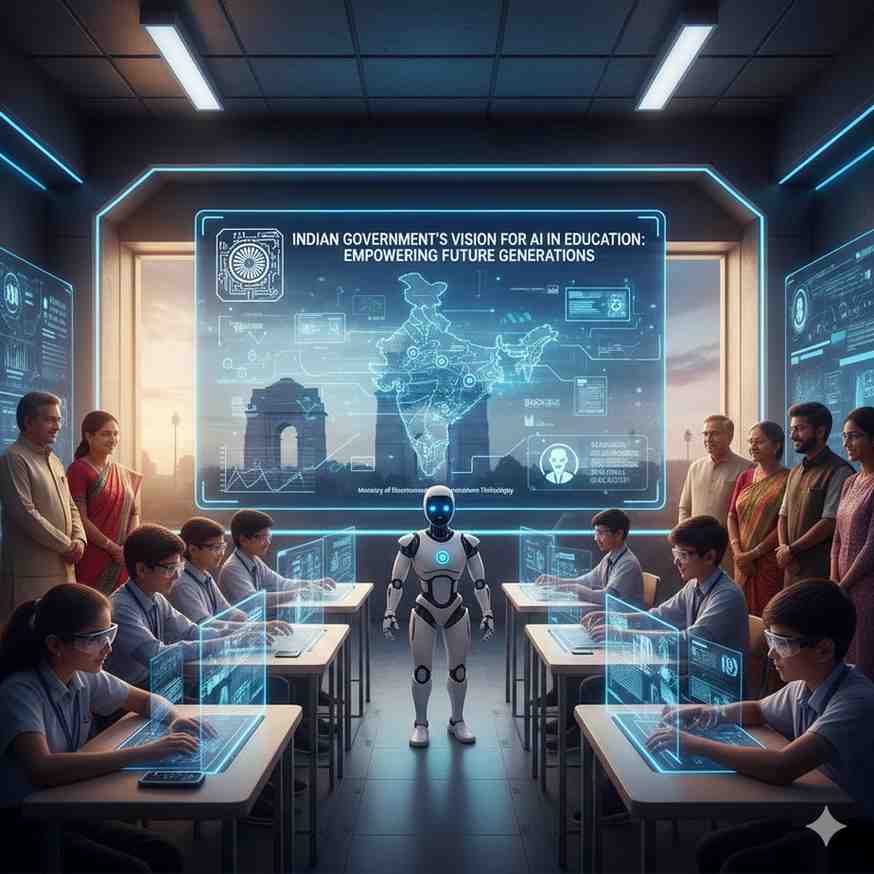
The Indian Government’s Vision for AI in Education: Empowering Future Generations
- admin
- December 26, 2025
- Government, Tech Updates
- 0 Comments
Introduction: Integrating AI to Revolutionize Education
Recognizing the transformative potential of Artificial Intelligence (AI), the Indian government is proactively integrating AI into the education sector to enhance learning outcomes and prepare future generations for the digital age. This initiative aims to personalize learning, make education more accessible, and equip students with the necessary skills to thrive in an increasingly AI-driven world. The government’s vision encompasses a broad strategy that utilizes AI to address educational disparities and innovate teaching methodologies.
Strategic Initiatives for AI in Education
The Indian government’s approach to embedding AI in education is comprehensive, focusing on several key areas:
- AI in Curriculum and Pedagogy: The government is integrating AI into the curriculum across various levels of education. Initiatives include introducing AI as a subject in secondary schools and incorporating AI-driven tools in classrooms to enhance teaching and learning processes. These tools provide personalized learning experiences, adapt to individual learning paces, and offer interactive and engaging educational content.
- Teacher Training and Development: Recognizing that the successful implementation of AI in education relies heavily on teachers, the government is investing in extensive teacher training programs. These programs aim to equip educators with the necessary skills to effectively use AI tools in teaching, ensuring that they can guide and facilitate students in an AI-enhanced learning environment.
- AI for Inclusive Education: AI technologies are being deployed to make education more inclusive. AI-driven applications such as speech-to-text, language translation, and adaptive learning platforms are particularly beneficial for students with disabilities or those who speak different languages. These technologies ensure that all students have access to personalized and equitable educational opportunities.
- Infrastructure Development: To support the integration of AI in education, the government is enhancing digital infrastructure in schools and universities. This includes providing high-speed internet connections, digital devices, and cloud computing resources to facilitate AI adoption.
- Partnerships and Collaborations: The government is collaborating with tech companies, educational institutions, and non-profits to drive AI innovation in education. These partnerships help in developing new AI tools and solutions that are tailored to India’s educational needs and challenges.
Regulatory Framework and Policies
To ensure the ethical use of AI in education, the government has established guidelines and policies:
- Data Privacy and Security: Policies are in place to protect student data collected through AI systems. These guidelines ensure that data is used ethically and that the privacy and security of student information are maintained.
- Quality Standards for AI Educational Tools: The government sets quality standards for AI educational tools to ensure they are safe, effective, and free from biases. These standards are designed to maintain a high level of educational quality and relevance.
- Monitoring and Evaluation: Regular monitoring and evaluation mechanisms are established to assess the effectiveness of AI tools in improving educational outcomes. This helps in fine-tuning AI applications and strategies over time.
Challenges and Future Prospects
Despite these efforts, there are several challenges to the widespread adoption of AI in education:
- Digital Divide: Bridging the digital divide is crucial as disparities in access to technology can exacerbate educational inequalities.
- Ethical Concerns: There are ongoing concerns regarding the ethical implications of AI in education, including the potential for bias and the impact of AI on student privacy.
- Sustainability of AI Initiatives: Ensuring the long-term sustainability of AI initiatives requires continuous funding, innovation, and policy support.
Conclusion: Shaping a Future-Ready Education System
The Indian government’s vision for AI in education is set to fundamentally transform the educational landscape. By continuing to develop and refine AI integration strategies, the government can provide students with a robust education that is personalized, inclusive, and aligned with future technological advancements. This forward-thinking approach not only enhances educational outcomes but also equips students with the skills necessary to succeed in a rapidly evolving global economy.