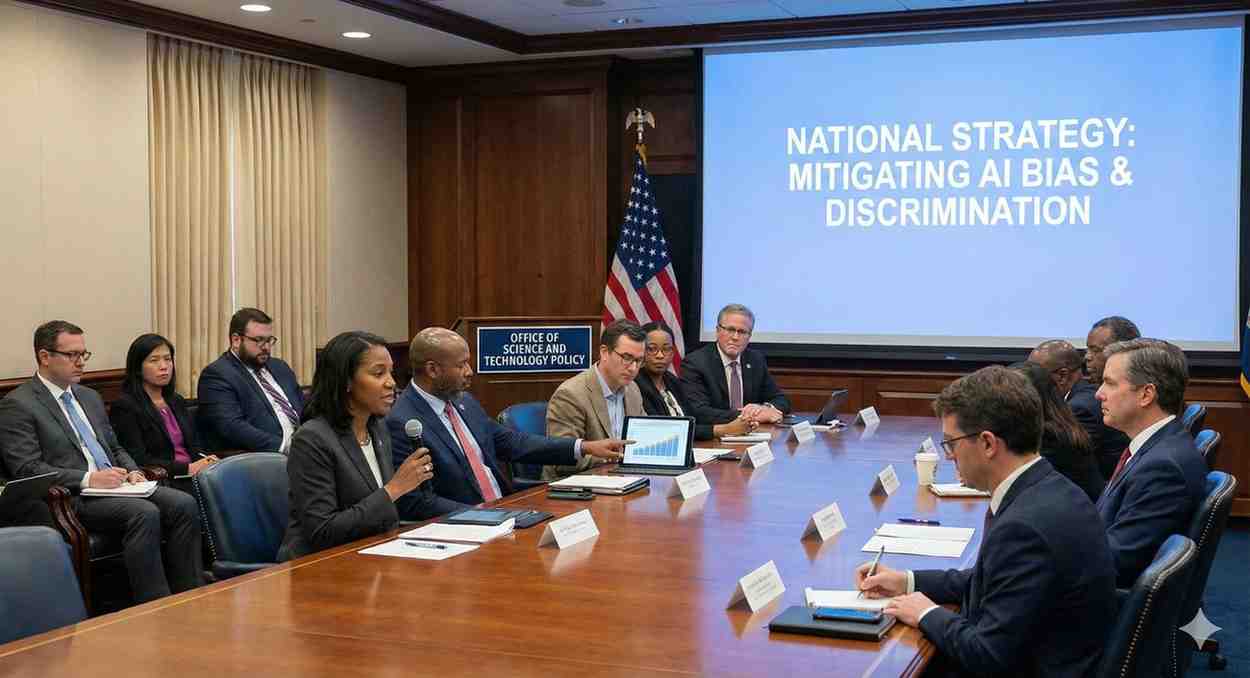
The Government’s Strategy to Address AI Bias and Discrimination
- admin
- December 17, 2025
- Government, Tech Updates
- 0 Comments
Introduction: Ensuring Fairness in AI Applications
As Artificial Intelligence (AI) becomes increasingly integral to various sectors, the potential for bias and discrimination embedded within AI systems poses significant ethical challenges. Recognizing the importance of addressing these issues, the Indian government has developed a comprehensive strategy to mitigate bias and promote fairness in AI deployments. This approach is essential to ensure that AI technologies benefit all sections of society equitably and uphold the principles of justice and equality.
Government Measures to Combat AI Bias
The Indian government’s strategy to address AI bias includes several key measures aimed at ensuring AI systems are transparent, accountable, and free from discrimination:
- Development of Ethical AI Guidelines: The government, through agencies like NITI Aayog, has formulated guidelines that outline ethical standards for AI development and usage. These guidelines emphasize the importance of fairness, accountability, and transparency in AI systems. They serve as a framework for developers and companies to ensure their AI applications do not perpetuate existing biases or create new forms of discrimination.
- Regulatory Oversight: The government has proposed the establishment of an AI regulatory body tasked with overseeing AI developments across industries. This body’s responsibilities include monitoring AI applications for bias, ensuring compliance with ethical guidelines, and taking corrective actions when necessary.
- Promoting Diversity in AI Development Teams: To counteract unconscious biases that may arise during the AI development process, the government encourages diversity in AI research and development teams. Policies and incentives have been introduced to promote the participation of underrepresented groups in the technology sector, thereby bringing diverse perspectives that can help identify and eliminate biases at the development stage.
- Mandatory Bias Audits: For critical AI applications, especially in sectors like healthcare, criminal justice, and employment, the government mandates regular bias audits. These audits are conducted by independent third-party auditors who assess AI systems for any signs of bias or unfair outcomes. The results are made public to maintain transparency and build public trust in AI technologies.
- Education and Awareness Programs: Recognizing that awareness is key to addressing AI bias, the government has initiated several educational programs aimed at AI developers, users, and policymakers. These programs focus on the importance of ethical AI development and the social impacts of AI technologies.
- Collaboration with Academia and Industry: To further its efforts, the government collaborates with academic institutions and industry leaders to research and develop methods to detect, mitigate, and prevent AI bias. These collaborations also aim to advance the understanding of ethical AI and develop new technologies that ensure fairness.
Challenges and Future Directions
While the government’s strategy provides a robust framework to tackle AI bias, several challenges remain:
- Complexity of AI Algorithms: The complexity of AI algorithms makes it difficult to understand how decisions are made, known as the “black box” problem. Addressing this requires advancements in AI explainability.
- Global Standards: Aligning India’s AI bias mitigation efforts with international standards is crucial to ensure that Indian AI products are globally competitive and compliant.
- Data Quality and Availability: The quality and diversity of data used to train AI systems significantly impact their fairness. Ensuring access to high-quality, representative data is a continuous challenge.
Conclusion: Building a Foundation for Ethical AI
The Indian government’s comprehensive strategy to combat AI bias is a critical step toward responsible AI development. By implementing stringent guidelines, fostering diversity, and ensuring rigorous oversight, the government is not only addressing the ethical challenges posed by AI but also paving the way for a fair and just technological future. As these efforts evolve, they will play a pivotal role in shaping the landscape of AI applications across the country, ensuring they are used for the benefit of all citizens.