The 48-Hour Countdown: Trump’s Ultimatum to Tehran
- Editor
- March 23, 2026
- Defence, Politics, Politics Video
- 0 Comments
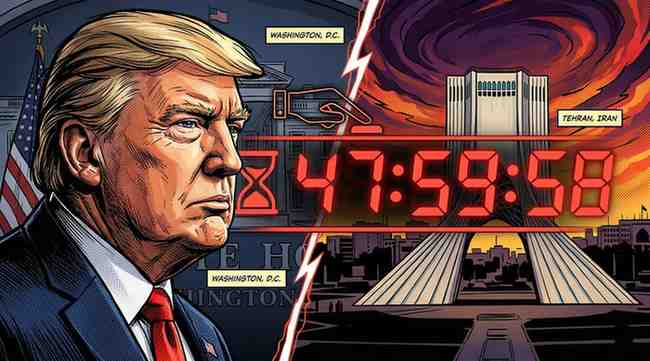
WASHINGTON D.C. — In a move that has sent shockwaves through global energy markets, President Donald Trump has issued a 50-word “final notice” to the Iranian regime. The demand is singular: fully reopen the Strait of Hormuz to all international traffic within 48 hours or face the systematic destruction of Iran’s domestic power grid.
The ultimatum follows weeks of “shadow boxing” in the Persian Gulf, where Iranian fast-boats and drone swarms have effectively throttled 20% of the world’s oil supply. Trump’s rhetoric has shifted from “maximum pressure” to “maximum impact,” signaling that the U.S. is no longer interested in proxy skirmishes but is prepared for direct infrastructure warfare.
Narrative vs. Reality: The $200 Billion Discrepancy
On the campaign trail and social media, the President has painted a picture of absolute American dominance, claiming the Iranian Navy has been “reduced to driftwood” and their industry is “in total shambles.” However, leaked documents from the Pentagon tell a more complex and expensive story.
- The Funding Gap: While the administration describes the conflict as a “quick cleanup,” the Department of Defense has reportedly moved a $200 billion emergency supplemental request to Capitol Hill.
- The High Cost of Precision: Military analysts suggest this massive figure indicates that Iran’s “asymmetric” capabilities—specifically their deep-buried missile silos and advanced Russian-made S-400 defense systems—are proving far more resilient than publicly admitted.
- The Logistics Tail: A significant portion of these funds is earmarked for “long-range munitions replenishment,” suggesting the U.S. has burned through its stockpile of precision-guided bombs at an unsustainable rate.
The Oil Waiver Paradox: A 30-Day Breathing Room
In a move that appears to contradict the aggressive military stance, the U.S. State Department has quietly issued a 30-day “Stability Waiver” for certain shipments of Iranian crude oil. This “Surprise Strategy” is a desperate attempt to put a ceiling on skyrocketing global energy prices.
By allowing specific tranches of Iranian oil to reach Asian markets, the U.S. hopes to:
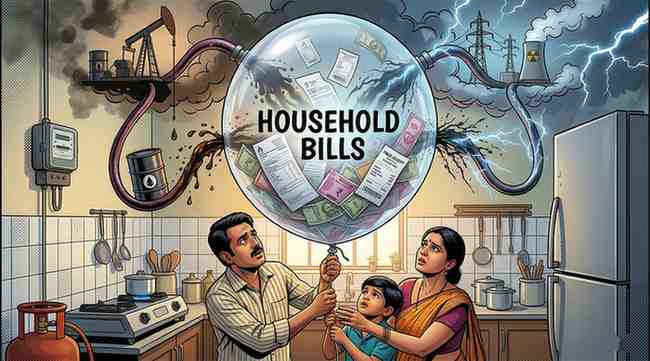
- Prevent a Global Recession: With Brent crude flirting with $120 a barrel, the waiver acts as an economic pressure valve.
- Isolate Tehran Politically: By showing “flexibility” for the sake of global consumers, the U.S. attempts to keep European and Asian allies from breaking the sanctions regime entirely.
The “Power Grid” Strategy: Why Targets are Shifting
The shift in targeting toward power plants represents a new doctrine in the conflict. Rather than engaging in a war of attrition with the Iranian Revolutionary Guard Corps (IRGC) in the mountains, the U.S. is targeting the “livability” of Iranian cities.
If the 48-hour deadline passes without a stand-down in the Strait, the Pentagon’s “Target Package A” reportedly includes the Bushehr Nuclear Power Plant (non-nuclear components) and the Damavand hydroelectric facilities. The goal is clear: flip the switch on the Iranian economy to force a domestic uprising before the $200 billion war chest runs dry.
Key Figures at a Glance
| Metric | Current Status |
| Deadline | Expires 23:59 EST, Tuesday |
| Oil Waiver Duration | 30 Days |
| Military Budget Request | $200 Billion |
| Global Oil Price Impact | +14% in last 72 hours |
Bottom Line
The administration is walking a razor-thin wire. Publicly, the message is one of total victory and minimal cost; privately, the Pentagon is preparing for a generational expenditure. The 30-day oil waiver is the only thing keeping the global economy from a freefall while the world waits to see if Tehran blinks before the lights go out.