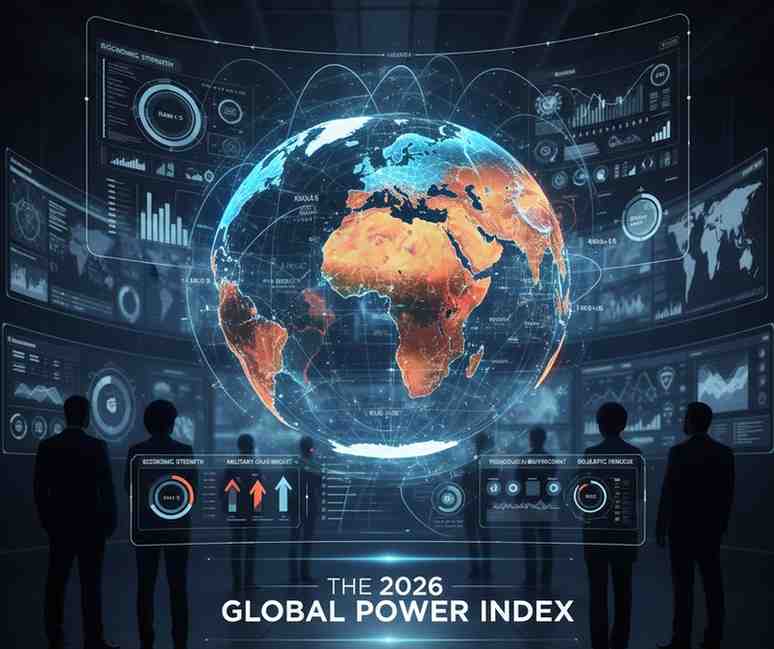
The 2026 Global Power Index: Which companies, not countries, set the rules of the decade?
- admin
- January 14, 2026
- Politics, World View
- 0 Comments
Key highlights
- There is no single official “Global Power Index” for companies. But in 2026, “power” looks like control of chokepoints: compute, chips, cloud, payments rails, and distribution.
- The most durable empires are often the ones that can scale infrastructure + ecosystems (not just sell products). See how major firms describe their segments and dependence in statutory filings. SEC+2SEC+2
- Regulation doesn’t always shrink power; it can raise the cost of entry and reward the firms that can build compliance into the stack (eg, gatekeeper regimes). s201.q4cdn.com
First: what do we mean by “power” in 2026?
Not flags. Friction control. The ability to decide:
- who gets capacity first
- which standards become default
- what it costs to operate on the rails
- what happens when you break a rule
So this “index” is really a lens: who controls the bottlenecks.
The 5 control points that behave like power
1) Compute supply (AI accelerators + systems)
If compute is scarce, the owners set terms. NVIDIA’s statutory reporting shows how central Data Center became to its business during the AI wave—this is the modern equivalent of owning the oil wells. SEC
2) Foundry + advanced packaging capacity
The real choke point isn’t the chip design tweet—it’s who can manufacture at scale. TSMC’s annual reporting highlights its scope, customer breadth, products/technologies, and position in what it defines as “Foundry 2.0.” investor.tsmc.com+1
3) Toolchains and ecosystems (lock-in without chains)
Ecosystems win quietly: APIs, developer stacks, certified partners, compatibility cycles. Once enterprises build on a stack, switching isn’t a preference—it’s a project.
4) Payments rails
Power is the ability to be the default checkout, the default settlement route, the default anti-fraud gate. BIS payment statistics and Red Book work track how cashless methods keep growing—rails matter because they sit under everything. Bank for International Settlements
5) Distribution + logistics + attention
If you control fulfillment and marketplace gravity, you influence pricing and survival. Amazon’s Form 10-K discusses how third-party sellers use “Fulfillment by Amazon” and how those services tie into scale and cost structures. SEC
The “index” you can actually use (simple scoring)
Ask, for any company:
- Do others need it daily to operate?
- Is there a hard capacity constraint?
- Is switching painful?
- Does it sit at a regulatory checkpoint?
- Can it bundle adjacent markets?
If “yes” stacks up, you’re looking at real power—not just a famous brand.
Small questions people search
Does market cap decide power?
Market cap is a snapshot. Chokepoints are leverage. A smaller firm with a bottleneck can dictate terms to larger tenants.
Who’s most exposed in 2026?
Companies that rent compute, rent distribution, and rent payments—tenants on someone else’s rails.