Mythology vs. Philosophy: How Both Are Essential in Understanding Hinduism
- admin
- December 11, 2025
- Opinion & Analysis
- 0 Comments
“Two Sides of the Same Coin: Exploring the Interplay of Myth and Philosophy in Hindu Thought”
In a world increasingly fascinated by the intersection of ancient wisdom and modern spirituality, Hinduism stands out for its seamless blend of mythology and philosophy. From the captivating tales of gods and goddesses to the profound debates on the nature of existence, Hinduism draws from both its mythological narratives and philosophical doctrines to present a holistic worldview. But how do these seemingly divergent elements work together to define one of the world’s oldest religions?
Recent Debates Rekindle Interest in Ancient Wisdom
In recent months, academic and cultural circles in India have been abuzz with discussions on the role of mythology and philosophy in Hinduism. The renewed interest was sparked by the global success of Indian authors like Amish Tripathi and Devdutt Pattanaik, whose works reinterpret Hindu myths, and the rising popularity of platforms like the Jaipur Literature Festival, where philosophical discussions often take center stage.
These developments raise a crucial question: Are mythology and philosophy complementary, or do they serve distinct, separate purposes in understanding Hinduism?
The Role of Mythology in Hinduism
Mythology, or Itihasa-Purana, forms the narrative backbone of Hindu culture. Texts like the Ramayana, Mahabharata, and the Puranas weave stories that communicate moral values, cultural ethos, and spiritual ideals.
- Engaging Narratives:
- Tales of Krishna’s playful mischief and Rama’s unwavering righteousness bring abstract ideals to life, making them relatable for the masses.
- Festivals like Diwali and Holi are rooted in these stories, showing how mythology influences daily life and traditions.
- Symbolism and Meaning:
- Mythological characters and events often symbolize deeper philosophical truths. For instance, the churning of the ocean (Samudra Manthan) represents the struggle between good and evil forces within oneself.
Philosophy: The Intellectual Core of Hinduism
Hindu philosophy, rooted in texts like the Upanishads, Bhagavad Gita, and the six schools of Hindu thought (Darshanas), addresses the fundamental questions of existence: Who am I? What is reality? What is the ultimate purpose of life?
- Rational Inquiry:
- Unlike mythology, philosophy engages in analytical reasoning and debates. Schools like Advaita Vedanta and Samkhya explore metaphysical concepts such as Brahman (universal consciousness) and Moksha(liberation).
- Universality:
- Philosophical ideas often transcend cultural and religious boundaries. The Bhagavad Gita’s teachings on duty (karma) and detachment resonate universally, making it one of the most translated texts in the world.
Why Both Are Essential
Experts argue that mythology and philosophy are not contradictory but complementary. Dr. Ramesh Nair, a scholar at Banaras Hindu University, explained in a recent lecture:
“While philosophy appeals to the intellect, mythology captures the imagination. Together, they offer a complete spiritual experience.”
- Connecting the Abstract and the Practical:
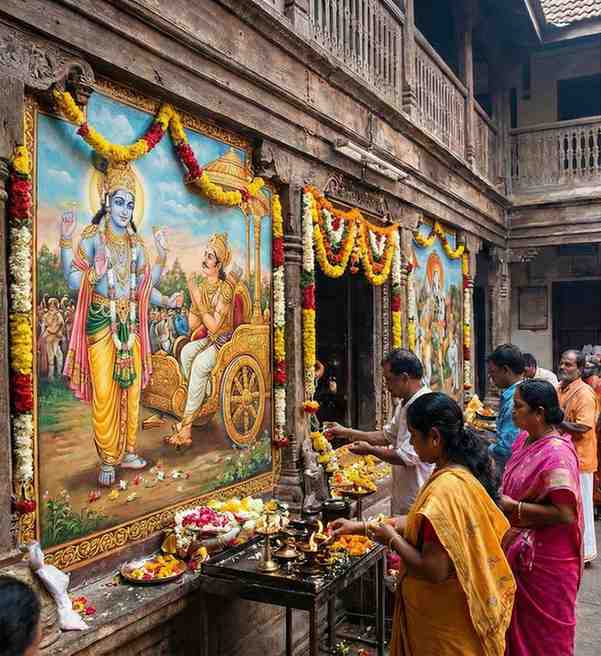
- Mythology simplifies philosophical principles, making them accessible. For example, the concept of Dharma (duty) is abstract but becomes tangible through characters like Arjuna in the Mahabharata.
- Appealing to Diverse Audiences:
- While philosophers may engage with texts like the Upanishads, the common populace finds inspiration in mythological stories and rituals.
- A Balanced Approach:
- Philosophy provides the structure, and mythology breathes life into it. Together, they guide Hindus toward self-realization and ethical living.
Contemporary Challenges
Despite their importance, both mythology and philosophy face challenges in modern times:
- Mythology Misunderstood: Critics argue that some mythological narratives perpetuate stereotypes or are used to justify social hierarchies.
- Philosophy Overshadowed: The abstract nature of philosophical texts often alienates younger generations, who may find them less engaging than mythological stories.
To address this, institutions like the Indian Council of Philosophical Research (ICPR) and authors like Devdutt Pattanaik are working to reinterpret ancient texts for a contemporary audience.
Conclusion: A Harmonious Interplay
Mythology and philosophy together form the dual pillars of Hinduism. While one connects through stories, emotions, and traditions, the other challenges the mind to think deeply about existence and purpose. As Hinduism continues to adapt to the modern world, understanding the interplay of these two dimensions is crucial to preserving its rich and multifaceted heritage.
Whether celebrated in vibrant festivals or debated in academic halls, the harmony of myth and philosophy ensures that Hinduism remains a living tradition, deeply rooted yet ever-evolving.