Can Political Leaders Be True Agents of Change?
Evaluating the Role of Leadership in Driving Transformative Progress in India
Key Insights
- Public Expectations: A 2024 Pew Research survey revealed that 71% of Indians believe political leaders prioritize short-term gains over long-term societal change.
- Historic Examples: Leaders like Mahatma Gandhi and Dr. B.R. Ambedkar exemplify how political leadership can inspire lasting transformation.
- Modern Leadership: Contemporary figures like Arvind Kejriwal and Naveen Patnaik show the potential for blending governance with change-making.
Introduction
Political leadership has the potential to be a powerful force for societal transformation. In a diverse democracy like India, where economic disparities, social inequities, and climate challenges persist, leaders who can inspire, implement, and sustain meaningful change are vital. But can political leaders truly fulfill this role, or are they constrained by the demands of populism, partisanship, and power dynamics?
Historic Change-Makers
1. Mahatma Gandhi: The Architect of Non-Violence
- Legacy: Gandhi mobilized millions through the principles of Ahimsa (non-violence) and Satyagraha (truth-force), driving India’s independence movement.
- Inspiration: His ability to lead with moral authority continues to influence social movements globally.
2. Dr. B.R. Ambedkar: Champion of Social Justice
- Constitutional Vision: Ambedkar’s work in drafting India’s Constitution laid the groundwork for equality and justice in governance.
- Impact: His advocacy for Dalit rights and reforms in caste-based discrimination transformed India’s social fabric.
Modern Leaders Driving Change
1. Arvind Kejriwal: Governance with a Vision
- Focus Areas: Kejriwal’s initiatives in education and healthcare, like the establishment of Mohalla Clinics and public school reforms in Delhi, have been transformative.
- Impact: His emphasis on policy-driven governance showcases how political leaders can address pressing public needs.
2. Naveen Patnaik: Disaster Management and Beyond
- Odisha’s Transformation: Patnaik’s leadership during cyclones and his focus on grassroots development have positioned Odisha as a model of resilience.
- Sustainability Focus: His programs in afforestation and climate adaptation highlight how leaders can integrate sustainability into governance.
Barriers to Being Agents of Change
1. Short-Termism in Politics
- Populist Promises: Leaders often prioritize electoral wins through quick fixes, such as loan waivers, rather than systemic reforms.
- Policy U-Turns: Decisions like the repeal of farm laws under pressure highlight the challenge of sustaining transformative policies.
2. Institutional Constraints
- Weak Oversight: Allegations of executive interference in institutions like the Election Commission and judiciary undermine long-term change-making.
- Corruption and Cronyism: Opaque political funding through mechanisms like electoral bonds reduces trust in leaders’ intentions.
Can Leaders Overcome These Barriers?
1. Lessons from Global Examples
- Nelson Mandela (South Africa): Mandela’s focus on reconciliation and institution-building demonstrates how political leaders can inspire unity and progress.
- Jacinda Ardern (New Zealand): Ardern’s compassionate leadership during crises like the Christchurch mosque shootings emphasizes empathy as a driver of change.
2. The Role of Public Accountability
- Civic Engagement: Movements like India Against Corruption highlight the role of citizen activism in holding leaders accountable.
- Transparency Mechanisms: Digital platforms that monitor political performance empower voters to demand results-driven governance.
The Path Forward
- Promote Ethical Leadership: Encourage the rise of leaders with a commitment to long-term progress over short-term popularity.
- Strengthen Institutions: Safeguard the independence of oversight bodies to ensure that policies are implemented effectively.
- Foster Civic Participation: Educate citizens on their role in democracy to demand accountability and visionary governance.
- Focus on Sustainability: Integrate environmental and social goals into political agendas to ensure lasting impact.
Conclusion
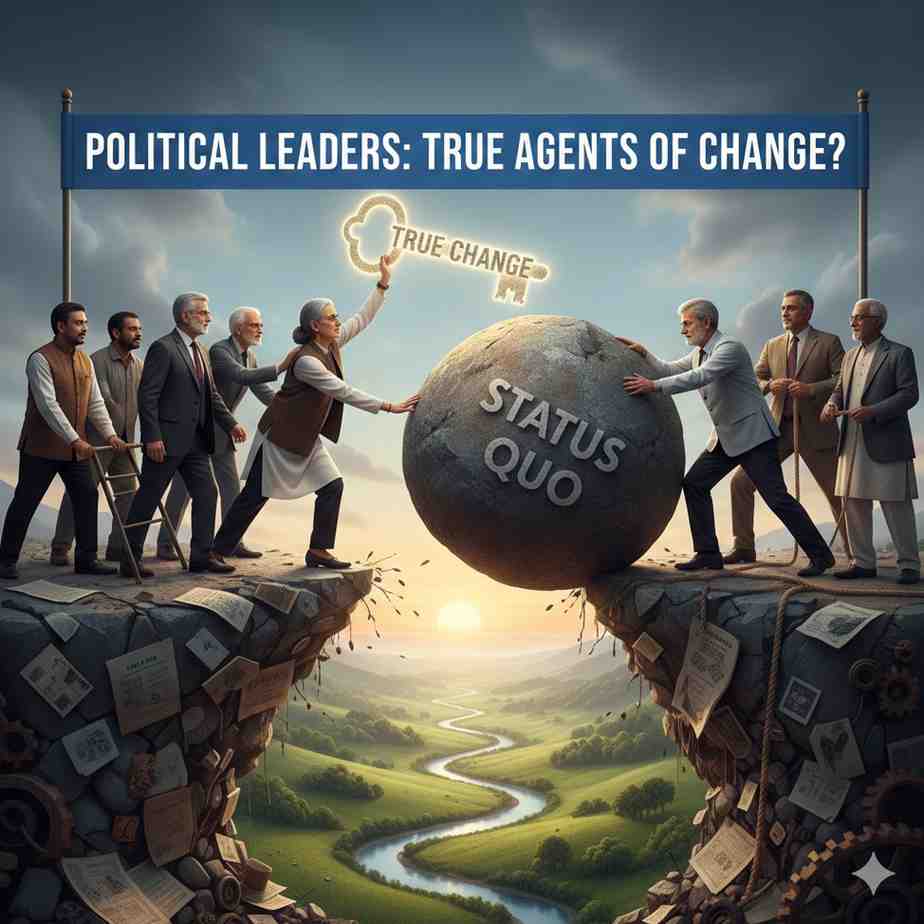
Political leaders can indeed be true agents of change, but this requires a combination of vision, accountability, and courage to prioritize societal progress over personal gain. India’s history and contemporary examples demonstrate that transformative leadership is possible, even amidst challenges. As citizens, the onus lies on us to elect and support leaders who inspire trust and implement meaningful reforms. The future of India’s democracy depends on leaders who can turn promises into progress and governance into a tool for lasting change.