Aviation Blueprint: India’s Plan for 50 New Airports to Reshape Real Estate and Connectivity
- Editor
- February 18, 2026
- Automobile, Companies & Industry, India, Tech & Innovation, Tech Updates
- 0 Comments
New Delhi, February 2026 — India is doubling down on its “Viksit Bharat” vision, with Civil Aviation Minister Kinjarapu Rammohan Naidu announcing an ambitious plan to build 50 new airports over the next five years. Speaking at the National Urban and Real Estate Development Conclave 2026, the Minister outlined a roadmap that positions aviation as the “scaffolding” for India’s next economic and urban leap.
The “33-Day” Infrastructure Sprint
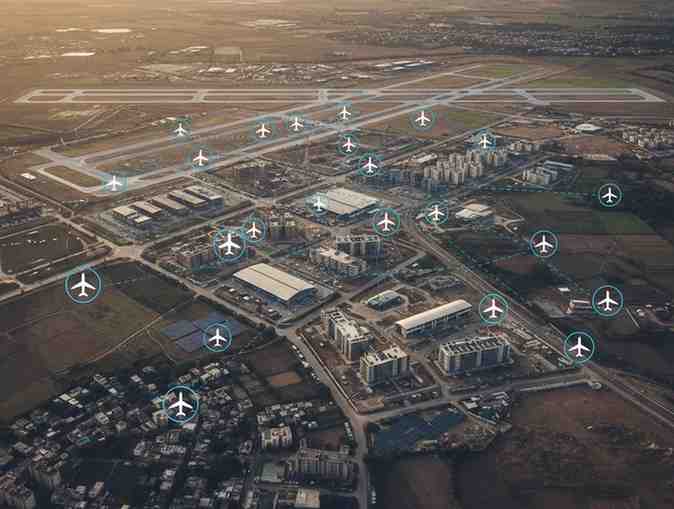
India has emerged as one of the world’s fastest-growing aviation markets, and the pace of construction reflects this urgency. Currently, India has 165 operational airports, a massive jump from just 74 in 2014.
The Minister highlighted a staggering statistic: on average, India is currently opening a new airport or terminal every 33 days. This rapid expansion is designed to keep pace with a passenger volume that is projected to hit 665 million by 2031, necessitating a preemptive build-out of capacity rather than reacting to congestion after the fact.
Airports as Urban Catalysts
A key theme of the announcement was the synergy between aviation and the real estate sector. Minister Naidu emphasized that airports are no longer just transit points but are becoming central hubs for urban development:
- The Multiplier Effect: The development of new airports in Tier-II and Tier-III cities is expected to trigger a surge in demand for residential, commercial, and hospitality projects.
- Economic Valuation: With India’s real estate sector projected to reach $1 trillion by 2030, the government views air connectivity as the primary driver for “balanced urban development” across the country.
- Policy Easing: To support this, the Ministry is actively working with the ICAO to revise height restrictions for buildings near airports, ensuring safety while allowing for denser urban growth in metropolitan areas like Mumbai and Chennai.
The UDAN Effect: Democratizing the Skies
The backbone of this expansion remains the Regional Connectivity Scheme (RCS) – UDAN. Now in its 8th year, the scheme has already benefited over 1.6 crore passengers across 657 operational routes.
The next phase of the 50-airport plan will focus on:
- Underserved Regions: Prioritizing hilly terrains, the North-East, and aspirational districts.
- Strategic Hubs: Moving away from city-centric models toward regional hubs, such as the upcoming Bhogapuram International Airport, which is set to transform North Andhra into a logistics powerhouse.
- Secondary Airports: Removing the “150-km rule” to allow big cities like Delhi and Mumbai to operate with multiple airports (e.g., Jewar and Navi Mumbai) to manage saturation.
Vision 2047: 350 Airports
The five-year plan for 50 airports is merely a milestone toward a much larger goal. Under the “Viksit Bharat 2047” initiative, India aims to have a network of 350 to 400 operational airports.
To support this massive fleet, Indian carriers have already placed orders for over 1,700 aircraft, the largest order book in global aviation history. This growth is being backed by a ₹15,000 crore investment from the Airports Authority of India (AAI) to modernize air traffic control with AI-led automation.
Bottom Line
The era of air travel being a luxury for the few is officially over. By building an airport every month and planning dozens more, the government is betting that connectivity will be the “fuel” for India’s real estate boom and regional equity. As Minister Naidu put it, 2047 is not a challenge, but a period of “unlimited opportunities.”