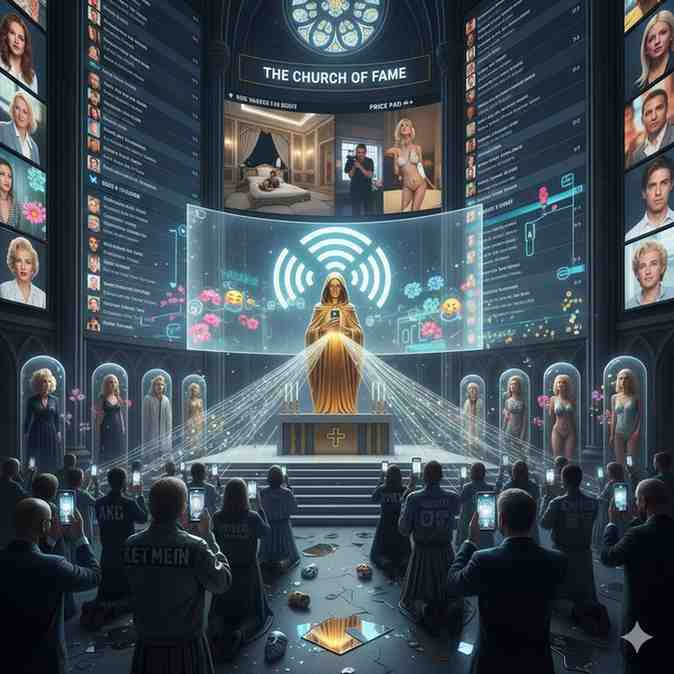
Fame as Religion, Rituals, Saints, Followers, and the Price Paid in Private
- admin
- January 18, 2026
- Lifestyle Trends, Psychology
- 0 Comments
Key highlights
- Fame behaves like belief: symbols, rituals, communities, moral policing.
- The modern “temple” is the feed; the modern “priesthood” is PR + algorithms.
- Happiness drops when identity depends on applause you can’t control.
Fame today looks less like success and more like a belief system.
It has rituals: daily posting, public appearances, “drops,” apology notes, birthday edits, couple reveals. It has saints: celebrities whose every action becomes symbolic. It has followers: communities that defend, attack, and convert. It even has heresy trials: cancellations, boycotts, purity tests.
The feed becomes a temple because it is where visibility gets validated. And PR becomes a priesthood because it interprets the celebrity’s “meaning” for the public: what was intended, what was misunderstood, what was “taken out of context.”
Here’s the monk-like pessimism: religions traditionally offered salvation from suffering. Fame offers suffering dressed as salvation. It promises belonging, but delivers dependence. When your worth becomes measurable — likes, views, trends — you start outsourcing self-respect to strangers.
For the audience, this religion also extracts a cost. It turns your attention into tribute. It makes you emotionally invested in people you don’t know, while real relationships quietly starve.
Myth-busting, gently:
- Myth: Fame automatically brings happiness.
Reality: Fame brings options. Happiness still requires privacy, meaning, and stable identity. - Myth: The problem is celebrity weakness.
Reality: The system is designed to reward performance over peace.
The most honest 2026 stance is this: enjoy art, respect craft, and stop treating visibility as virtue. Fame is not holiness. It is a market signal — and markets are famously cruel to anything human.