The Controversy Surrounding Land Acquisition in Uttar Pradesh – Development or Displacement?
- admin
- December 16, 2025
- Government, law & rights
- 0 Comments
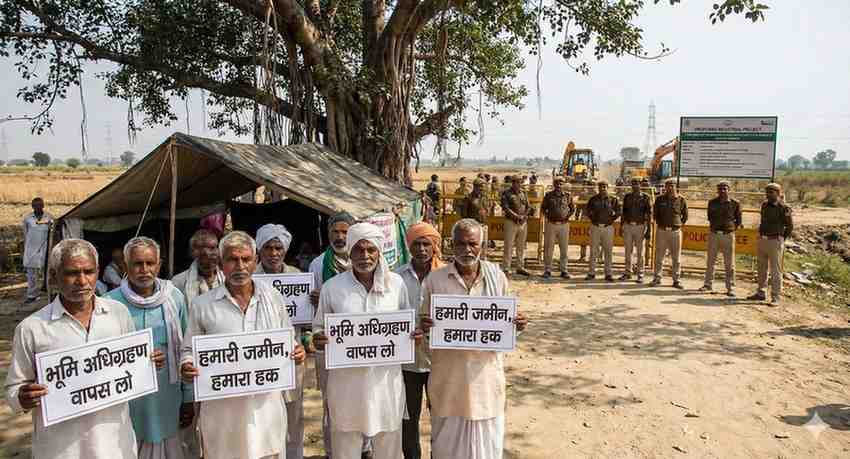
Land acquisition has long been a contentious issue in Uttar Pradesh, driven by the need for rapid industrialization and infrastructural expansion. With projects like expressways, airports, and industrial zones, the state is addressing its economic ambitions but often finds itself mired in disputes over compensation, displacement, and environmental impact. Highlighted by the ongoing case of Akbar Nagar, where local farmers and residents have voiced grievances, the debate raises crucial questions: is progress truly equitable, or are vulnerable communities bearing the brunt?
Major Land Acquisition Projects in Uttar Pradesh
Jewar International Airport
- Scale: Spread across 5,000 hectares in Gautam Buddh Nagar district, this is one of the largest greenfield airport projects in India.
- Compensation: As per official records, landowners were compensated at four times the prevailing circle ratein rural areas, in line with the Land Acquisition, Rehabilitation, and Resettlement Act, 2013.
- Controversy: Local groups claimed that market rates exceeded the compensation provided, leading to sporadic protests.
Ganga Expressway
- Scale: Covering 594 kilometers, this expressway connects Prayagraj and Meerut, requiring the acquisition of over 6,500 hectares of land across 12 districts.
- Farmer Concerns: According to reports from the Uttar Pradesh Expressways Industrial Development Authority (UPEIDA), many farmers in districts like Bulandshahr protested, citing the acquisition of fertile farmland and demanding better compensation.
Akbar Nagar Industrial Project
- Background: The development of an industrial corridor in Akbar Nagar involved the acquisition of over 500 acres of farmland, primarily used for agriculture.
- Compensation and Rehabilitation: Affected families were promised compensation at circle rates, alongside alternative employment opportunities. However, official submissions to the Allahabad High Court revealed delays in fulfilling these promises, leading to ongoing legal challenges.
- Environmental Concerns: Activists reported the loss of wetlands and arable land, critical for the region’s ecological balance.
Challenges and Shortcomings
1. Compensation Disputes
The Land Acquisition, Rehabilitation, and Resettlement Act, 2013, mandates compensation at four times the market rate in rural areas and twice in urban areas. However, disputes over the circle rate versus actual market value persist.
- Akbar Nagar Case: Local farmers alleged that compensation did not reflect prevailing market rates, leaving them under-compensated by as much as 30-40%, as noted in a 2023 petition to the Allahabad High Court.
2. Delayed Rehabilitation
While the law mandates timely rehabilitation, several projects report delays in alternative housing and livelihood support.
- Example: Affected families in Akbar Nagar highlighted that only 20% of promised housing units had been delivered as of 2023, per a report by the National Green Tribunal (NGT).
3. Environmental Impact
Projects often lead to deforestation, loss of biodiversity, and soil degradation.
- Key Example: Data from the Ministry of Environment, Forest and Climate Change (MoEFCC) revealed that the construction of the Ganga Expressway resulted in the clearance of over 5,000 hectares of farmland and forest cover, raising sustainability concerns.
4. Socio-Political Tensions
Protests and legal battles have become routine in land acquisition cases.
- Akbar Nagar: The protests in this region have drawn support from local activists and farmer unions, who argue that the acquisition violated Environmental Impact Assessment (EIA) guidelines.
Government Initiatives to Address Concerns
Revised Compensation Models
The state government has reiterated its commitment to following the 2013 Land Acquisition Act, ensuring compensation aligns with market rates.
Land Bank Creation
Unused government land is being repurposed for future projects, minimizing the need for fresh acquisitions.
Enhanced Monitoring
Projects like Jewar Airport now include real-time monitoring mechanisms to ensure timely disbursement of compensation and implementation of rehabilitation plans.
Grievance Redressal Mechanisms
District-level grievance cells have been established to address complaints, although their effectiveness remains under scrutiny.
Recommendations for Equitable Land Acquisition
- Transparent Compensation Systems: Use updated market rates and ensure independent valuation of land to avoid disputes.
- Timely Rehabilitation: Fast-track the provision of alternative housing and employment opportunities for displaced families.
- Environmental Safeguards: Strengthen environmental assessments to protect vulnerable ecosystems and ensure sustainable development.
- Community Participation: Involve local stakeholders in decision-making processes to build trust and reduce resistance.
Conclusion: Development at a Crossroads
Land acquisition in Uttar Pradesh remains a balancing act between economic growth and social equity. Cases like Akbar Nagar underscore the importance of transparent processes, fair compensation, and sustainable practices. While infrastructure projects like Jewar Airport and the Ganga Expressway promise long-term benefits, their success depends on addressing the concerns of those displaced and impacted.
The path to progress must be paved with fairness and inclusivity, ensuring that development uplifts communities rather than marginalizing them. Only then can Uttar Pradesh truly achieve sustainable and equitable growth.