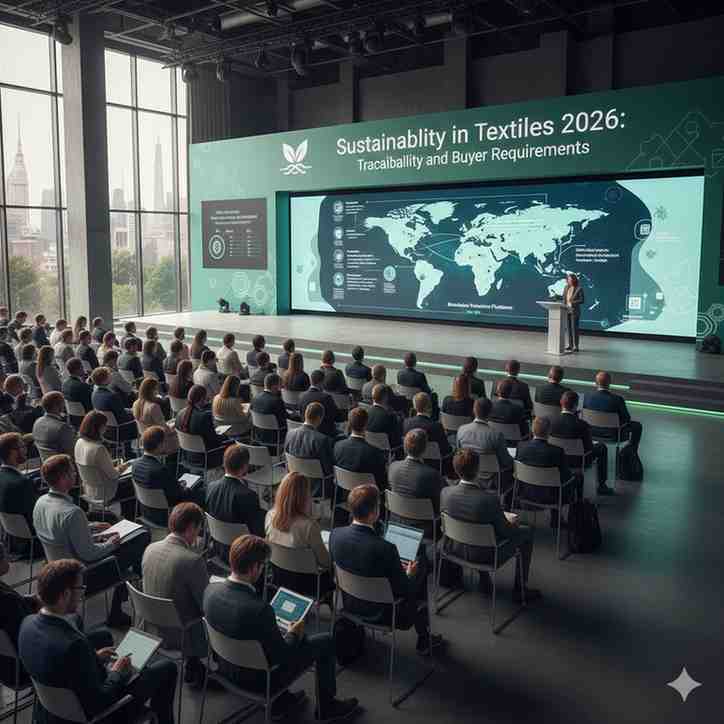
Sustainability in Textiles 2026: Traceability and Buyer Requirements
- admin
- January 8, 2026
- Energy & Environment, World View
- 0 Comments
Key highlights
- Sustainability is no longer “green branding”; it’s procurement eligibility.
- EU direction is clear: circular textiles + traceability are policy goals, not trends. EUR-Lex+1
- Exporters should treat traceability as a data pipeline, not a certificate hunt.
In 2026, textile buyers are less impressed by sustainability PDFs and more focused on whether you can prove origin, process, and compliance. The pressure is strongest from markets building formal rules around sustainable and circular textiles.
What is “traceability” in buyer language?
It’s the ability to answer, quickly and consistently:
- Where did the fibre come from?
- What processing happened (dyeing, washing, finishing)?
- Which units handled the batch?
- Can you produce documentation that matches purchase orders and shipment lots?
The EU has explicitly pushed a Strategy for Sustainable and Circular Textiles—meaning policy is moving towards durability, circularity, and system-level accountability. EUR-Lex
“Digital Product Passport” — should Indian suppliers care?
Even if you’re not selling directly in the EU, your buyer might. The EU’s Ecodesign for Sustainable Products Regulation framework is tied to the idea of product information moving digitally through supply chains. susproc.jrc.ec.europa.eu
Small questions people search (and practical answers)
Is sustainability only for big exporters?
No—big exporters simply get asked first. Smaller job-workers feel it later through buyer audits and subcontractor declarations.
What’s the fastest way to start traceability?
Start with what you already have: PO → batch → machine/shift logs → invoice → dispatch. Then standardize “one batch = one story”.
Do schemes exist that improve workforce readiness?
Yes—Samarth is designed as a demand-driven, placement-oriented textile skilling framework and has been extended through FY 2025–26.