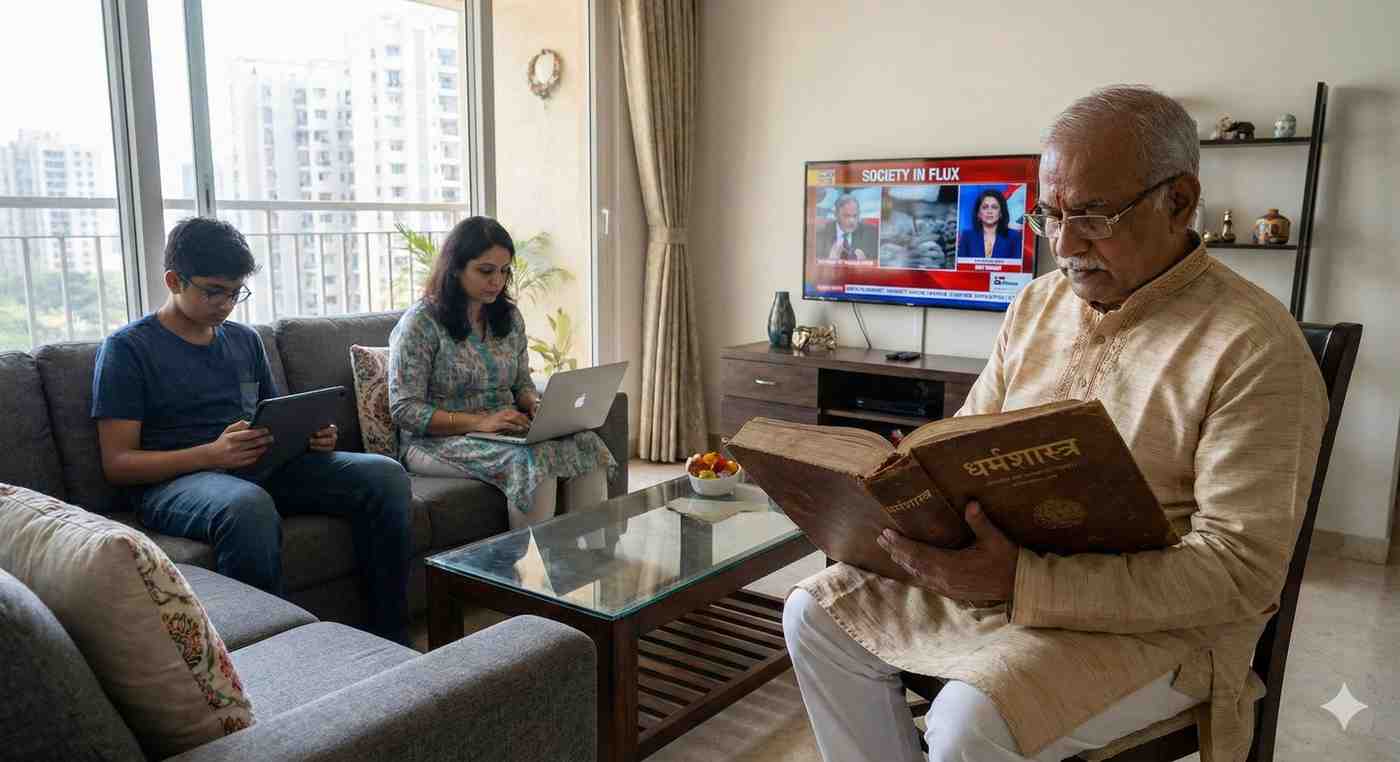
Are Shastras a Reflection of Our Changing Society?
Ancient Texts in a Modern Context
The Shastras, ancient Hindu scriptures that encompass spiritual, philosophical, and social wisdom, have long been considered guiding lights for ethical living and governance. While their core principles remain timeless, their interpretation and application have evolved alongside society, reflecting the dynamic relationship between tradition and modernity. But as our world changes rapidly, are the Shastras still a relevant mirror of contemporary values, or have we drifted too far from their essence?
1. The Shastras: Foundations of Ethical and Social Order
The Shastras provide a comprehensive framework for life, addressing spirituality, morality, and societal roles.
- Dharma Shastra: Focuses on duties and ethical behavior, emphasizing harmony between individual rights and collective responsibilities.
- Arthashastra: Offers insights into governance, diplomacy, and economic policies, showcasing practical wisdom for societal management.
- Manusmriti: Outlines societal roles and norms, though its interpretations have often sparked debate in the modern era.
At their core, these texts emphasize balance, adaptability, and the pursuit of justice (dharma), values that resonate across centuries.
2. Evolution of Interpretation
Traditional Foundations
- Historically, the Shastras were living texts, their teachings adapted by sages and scholars to suit societal needs.
- Example: Chanakya’s reinterpretation of the Arthashastra during the Mauryan Empire to guide governance and policy.
Modern Shifts
- Today, reinterpretations often focus on inclusivity and gender equality, areas where traditional readings are seen as misaligned with contemporary values.
- Example: Practices like caste discrimination, which some attribute to misinterpretations of the Manusmriti, are being reexamined through the lens of human rights.
- Metric: A 2022 study by the Indian Sociological Society found that 72% of respondents believed the Shastras must be adapted to modern ethical standards.
3. Reflecting a Changing Society
The adaptability of the Shastras ensures their relevance, but this requires active engagement:
- Gender Roles: While traditional interpretations emphasized specific roles for men and women, modern readings emphasize equality and shared responsibilities.
- Environmental Ethics: The Shastras advocate reverence for nature, aligning with today’s calls for sustainability and climate action.
- Atharvaveda: “The Earth is our mother, and we are her children,” resonates with modern environmentalism.
- Globalization and Diversity: The Vedic principle of Vasudhaiva Kutumbakam (“The world is one family”) aligns with efforts to foster inclusivity in an interconnected world.
4. Challenges in Application
- Selective Interpretations: Over time, portions of the Shastras have been misused to justify inequities, leading to skepticism about their relevance.
- Resistance to Change: While some view reinterpretation as a necessity, others see it as a deviation from tradition.
5. Are the Shastras Still Relevant?
The answer lies in their dynamic application:
- Universal Values: Principles like justice, balance, and harmony remain timeless and can address modern challenges like corruption, inequality, and environmental degradation.
- Adapting to Context: Just as ancient sages tailored the Shastras to their times, modern society must reinterpret them in the context of today’s ethical, cultural, and technological landscape.
Conclusion: A Mirror and a Guide
The Shastras are more than static texts; they are reflections of human endeavor, evolving alongside society while preserving their foundational values. As society changes, the Shastras remind us of the importance of balance—between tradition and progress, individual rights and collective good.
Their continued relevance depends not on rigid adherence but on thoughtful reinterpretation, ensuring they serve as a living guide for navigating the complexities of a rapidly changing world. The question is not whether the Shastrasreflect our society, but whether we are willing to engage with them in meaningful ways that align with our evolving values.