Higher GST ≠ Automatic Prosperity: A 2026 Guide to Inflation, Compliance, Base Effects, and Seasonality
- admin
- January 10, 2026
- Capital Journal
- 0 Comments
Key highlights
- October 2025 gross GST rose to ₹1,95,936 crore. Press Information Bureau+1
- The factsheet cites festive demand context; interpretation still requires restraint. Press Information Bureau
- In 2026, readers care about lived affordability—not just recorded turnover.
If 2026 is going to be noisy, one narrative will dominate: “collections are up, therefore everyone is doing better.” That leap is emotionally satisfying—and analytically weak.
Yes, October 2025 gross GST collections were ₹1,95,936 crore, higher than the previous year’s October figure, and the official note frames it as consistent with sustained festive demand. Press Information Bureau+1 But prosperity is not the same as turnover.
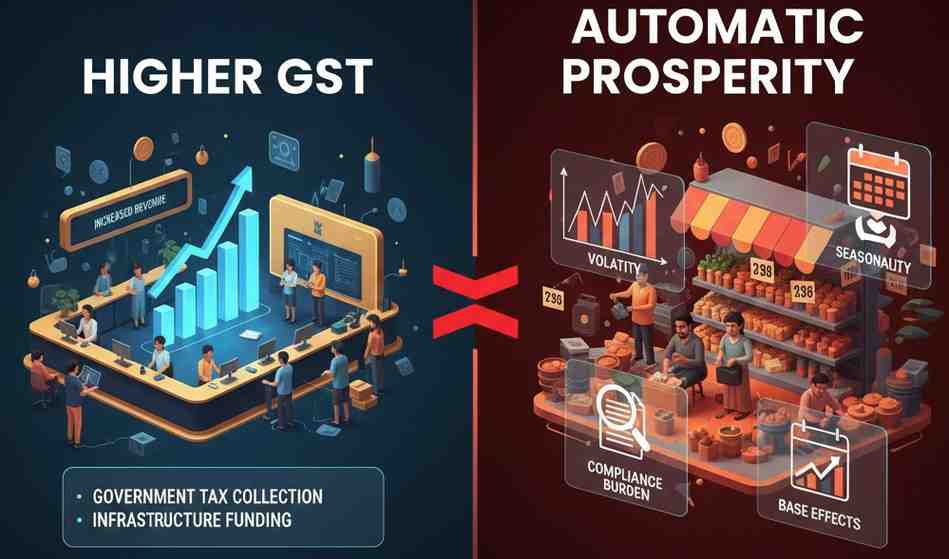
There are four reasons higher GST can coexist with household strain:
- Inflation effect: higher prices can inflate tax collections even if volumes are flat.
- Compliance effect: improved reporting widens the formal net and lifts collections.
- Base effect: year-on-year growth depends on the starting point.
- Seasonality: festive months structurally concentrate spending and invoicing.
So the 2026 editorial stance should be neither cynical nor celebratory. It should be accurate: rising GST suggests firm taxable activity in the formal economy, but it cannot tell you distribution—who gained, who struggled, who paid more for essentials, or whether wage growth kept up.
If you want to build reader trust in 2026, don’t pretend one number equals wellbeing. Use the number as a starting point, then ask the adult questions: what part is price, what part is volume, what part is compliance, and what part is seasonal.
That’s how you keep the tone neutral—and the analysis sharp.