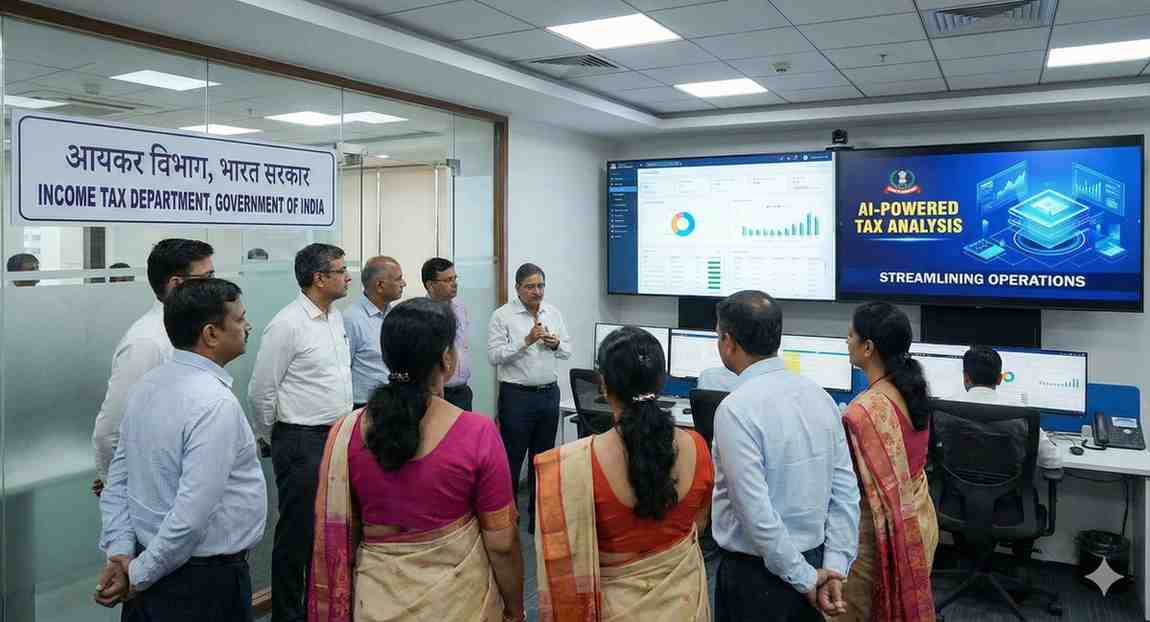
AI in Tax Administration: Streamlining Operations at the Income Tax Department of India
- admin
- December 10, 2025
- Capital Journal
- 0 Comments
Exploring how artificial intelligence is reshaping the management of Income Tax Returns (ITR) and enhancing operational efficiency within India’s Income Tax Department.
Key Highlights
- Automated ITR Processing: Use of AI to streamline the processing of Income Tax Returns.
- Fraud Detection Enhancements: AI-driven systems to improve accuracy and detect tax fraud more effectively.
- AI in Customer Service: Introduction of AI tools to enhance taxpayer interactions and response times.
- Data Analytics for Policy Making: Leveraging AI to analyze big data for better tax policy formulation.
1. Automated ITR Processing
The Income Tax Department of India has implemented AI technologies to automate the processing of Income Tax Returns, enhancing both speed and accuracy. This automation helps in identifying discrepancies, simplifying tax calculations, and ensuring that refunds are processed faster.
Implementation Details:
- AI algorithms automatically extract data from submitted ITR forms, checking for consistency and completeness. This reduces the manual labor required and minimizes human errors.
2. Fraud Detection Enhancements
AI systems are employed extensively to enhance the detection of fraudulent activities within tax filings. By analyzing patterns and inconsistencies in ITR submissions, AI tools can flag unusual transactions that may indicate potential fraud, helping auditors focus their efforts more effectively.
Technological Applications:
- Deployment of machine learning models that can learn from a vast array of previous tax filings to recognize signs of evasion or fraudulent reporting in real-time.
3. AI in Customer Service
To improve taxpayer satisfaction and engagement, the Income Tax Department utilizes AI-driven chatbots and virtual assistants. These tools provide taxpayers with 24/7 assistance, guiding them through the process of filing returns, addressing their queries, and providing updates on the status of their filings and refunds.
Service Enhancements:
- Chatbots like ‘Aayakar Setu’ that handle general inquiries and provide taxpayers with guided help on various tax-related issues.
4. Data Analytics for Policy Making
AI also plays a crucial role in analyzing collected data to inform tax policy decisions. The insights derived from AI analytics help the Income Tax Department and policymakers understand compliance patterns, tax base changes, and revenue impacts, leading to more informed decision-making.
Strategic Impact:
- AI-driven analytics platforms that assess the effectiveness of tax policies and suggest modifications based on real-world data, thereby optimizing tax revenue and compliance rates.
Challenges and Opportunities
While the introduction of AI in tax administration offers significant benefits, it also presents challenges such as ensuring the privacy and security of taxpayer data and maintaining the transparency of AI-driven decisions. Continuous improvements in AI technology and robust data protection laws are essential to address these concerns effectively.
Conclusion
The application of AI within the Income Tax Department of India has significantly revolutionized the processing of Income Tax Returns and overall tax administration. As AI technology continues to advance, it promises to further enhance efficiency, transparency, and taxpayer satisfaction, paving the way for a more modern and responsive tax system in India.