Global AI Handshake: Zomato, Wipro, and the Race for India’s Digital Soul
- Editor
- February 19, 2026
- Artifical Intelligance, Business, Companies & Industry, Development, Tech & Innovation
- 0 Comments
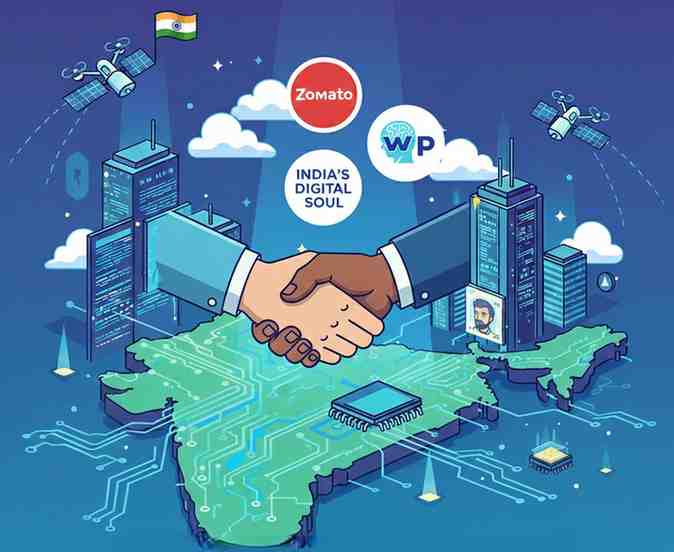
Bengaluru, February 2026 — India’s tech landscape has entered a “partnership era,” where domestic giants are no longer just observing global AI trends but are actively weaving them into the fabric of Indian commerce and IT. From food delivery to enterprise software, the week’s flurry of deals with OpenAI and Anthropic signals a strategic move to secure India’s place in the global AI hierarchy.
Zomato (Eternal): The Advent of “AI-Native” Commerce
Zomato’s parent company, Eternal, has announced a massive expansion of its collaboration with OpenAI. The goal is to move beyond simple chatbots and build India’s first “AI-native commerce ecosystem” across Zomato, Blinkit, and Hyperpure.
What this means for the consumer:
- Conversational Discovery: Instead of scrolling through menus, users can chat with an interface that understands context. For example: “I have three guests coming who are vegan; suggest a high-protein dinner from a nearby highly-rated spot.”
- Predictive Logistics: OpenAI’s models are being integrated into Stitch, Eternal’s internal orchestration platform, to automate merchant workflows and predict delivery surges before they happen.
- Visual Shopping: Using visual Gen AI to help users explore products through real-time image generation and tailored recommendations.
Wipro and the “Trustworthy AI” Push
Following a landmark trend in the IT sector, Wipro has confirmed a deepening partnership with Anthropic to leverage its “Claude” models. Wipro’s focus is on “controllable and trustworthy AI” for enterprise clients who are wary of the “hallucinations” often found in standard AI models.
Key Integration Areas:
- Claude Code: Wipro plans to integrate Anthropic’s specialized coding models into its developer workflows to accelerate software delivery.
- Industry-Specific Agents: Building AI “agents” for highly regulated sectors like telecommunications and financial services, where accuracy and compliance are non-negotiable.
- Automated “Muzdoori”: By integrating these tools, Wipro aims to automate the repetitive “manual labor” of campaign setups and coding, allowing human talent to focus on high-level strategy.
Sarvam AI: The Sovereign Contender
While big tech leans on global partnerships, Sarvam AI is championing the “Sovereign AI” movement. The Bengaluru-based startup is building foundational models designed specifically for the Indian context, arguing that global models often fail to capture the nuance of local languages.
Why Local Models Matter:
- Token Efficiency: Most global models are “token-heavy” for Indian scripts. Sarvam’s models are optimized to process Indian languages faster and at a much lower cost.
- Voice-First Design: Recognizing that India is a voice-driven market, Sarvam is prioritizing audio-in, audio-out capabilities across 11 major Indian languages.
- Cultural Nuance: Local models are trained on Indian data, ensuring they understand regional idioms and consumer behavior better than models trained primarily on Western datasets.
The Great AI Layer Debate
The industry is currently divided into two camps. On one side are the “Integrators” (Zomato/Wipro), who believe that leveraging “frontier” models like GPT-4 or Claude allows them to innovate faster at the application layer. On the other side are the “Architects” (Sarvam AI), who believe that without “owning the brain” (the foundational model), Indian tech will always be dependent on foreign APIs.
Critics warn that if India only builds “wrappers” around Western AI, it risks losing its technological sovereignty. However, supporters of the partnerships argue that the immediate efficiency gains for the Indian economy are too large to ignore.
Bottom Line
The trend is clear: Indian tech is moving from experimentation to infrastructure. Whether through global alliances or homegrown breakthroughs, the race is on to define how 1.4 billion people will interact with the digital world. The winners will be those who can blend global processing power with deep local relevance.