Geopolitical Tensions & Energy Crisis: Trump’s “Three-Week” Iran Plan and Europe’s Gas Crunch
- Editor
- April 2, 2026
- Business, Companies & Industry, Defence, Global Business, Politics
- 0 Comments
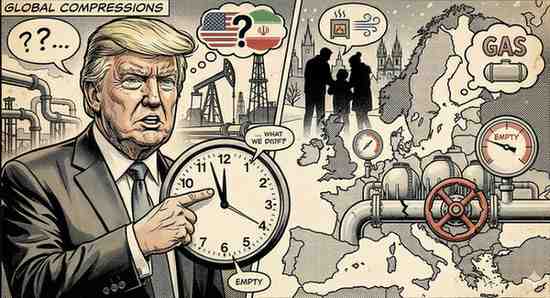
WASHINGTON / BRUSSELS — A dual-front crisis is reshaping global stability this week as U.S. President Donald Trump issues a bold timeline for the end of the conflict with Tehran, while European leaders scramble to address a natural gas shortage that experts warn could eclipse the 2022 energy crisis.
Trump Claims Iran Conflict Could End in “Three Weeks”
In a series of statements released on April 1, 2026, President Donald Trump asserted that the military and diplomatic standoff with Iran is entering its final stages. Trump claimed that the ongoing aerial campaigns and sanctions have successfully neutralized Iran’s nuclear capabilities, setting their program back by an estimated 15–20 years.
- The “Three-Week” Window: Trump vowed to “finish the job” quickly, stating, “We’re going to hit them extremely hard over the next two to three weeks,” while simultaneously hinting that the Iranian leadership is seeking a de-escalation.
- The Oil Strategy: Despite the current hostilities, the President signaled a long-term pragmatic shift, expressing an intention to eventually bring Iranian oil back into the global market under U.S.-favorable terms once a “total victory” is secured.
- NATO and Defense Spending: Parallel to the Middle East crisis, Trump has reignited tensions with European allies. He hinted at a potential U.S. exit from NATO, citing the continued failure of several member nations to meet the 2% GDP defense spending target. “Europe has to defend Europe,” Trump stated, suggesting that the U.S. may no longer secure vital energy routes like the Strait of Hormuz if allies do not increase their financial commitments.
Europe Faces “Critical” Energy Storage Levels
As geopolitical instability continues to rock the Middle East, the European energy market has spiraled into a fresh crisis. Natural gas prices have surged by 70% in recent weeks, driven by supply fears and the depletion of winter reserves.
Storage Capacity at Record Lows
Data from Gas Infrastructure Europe reveals that storage levels across the continent have hit dangerous thresholds as of April 2026:
| Country | Current Storage Level | Impact |
| Germany | ~20% | Lowest level for this date since 2011; industrial hubs face rationing risks. |
| Netherlands | ~10% | Critical lows following the depletion of the Norg and Grijspkerk facilities. |
| EU Average | <35% | Significantly below the 75-90% regulatory targets required for winter security. |
The “2022 Factor”
Market analysts warn that the 2026 crunch is fundamentally more dangerous than the 2022 crisis. While the 2022 shock was a result of the sudden loss of Russian pipeline gas, the current crisis involves a global bidding war for Liquified Natural Gas (LNG).
With the Strait of Hormuz facing periodic disruptions and U.S. LNG being diverted to higher-paying Asian markets, Europe is finding it increasingly difficult—and expensive—to refill its inventories ahead of the 2026/27 winter.
Economic Outlook and Industrial Impact
The 70% price spike is already trickling down to the manufacturing sector. In Italy and Germany, energy-intensive industries—such as steel, glass, and chemicals—have begun “demand destruction” measures, reducing output to avoid soaring utility bills.
European policymakers are now weighing emergency interventions, including:
- State-backed gas purchasing to centralize buying power.
- Mandatory storage levels returning to 90% despite the high cost of acquisition.
- Energy rationing protocols for non-essential commercial sectors.
With the U.S. administration signaling a “hemispheric security” shift and a potential withdrawal from European defense frameworks, the EU may be forced to navigate this energy shock largely on its own. The “security umbrella” that previously guaranteed stable energy corridors appears to be fraying at the same time the continent’s reserves are running dry.