Geopolitical Flashpoint: Operation “Epic Fury” & The Global Aftershock
- Editor
- March 2, 2026
- Business, Companies & Industry, Economy, Energy & Environment, Global Business
- 0 Comments
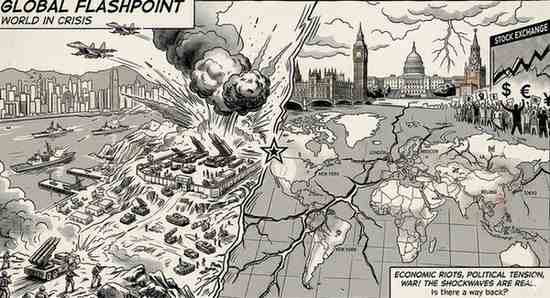
March 2, 2026-The geopolitical architecture of the Middle East has undergone a seismic shift following a high-stakes military gambit by the United States and Israel. Market participants globally are now bracing for a “New Normal” characterized by heightened risk premiums and a potential energy crisis.
Segment 1: The Strike — A Decapitation of Leadership
In a daylight operation codenamed “Epic Fury,” U.S. and Israeli forces executed a coordinated missile strike on February 28, 2026, targeting the heart of Iran’s power structure.
- The Target: The secure residence and office of Supreme Leader Ayatollah Ali Khamenei in Tehran.
- The Outcome: Iranian state media and the White House have confirmed the death of Khamenei. The strike also reportedly claimed the lives of his daughter, son-in-law, and several high-ranking members of the Islamic Revolutionary Guard Corps (IRGC).
- Justification: President Trump characterized the move as a preemptive strike against an “intolerable” ballistic threat and a pivot toward regime change, stating it gives the Iranian people a chance to “take back their country.”
Segment 2: The Retaliation — Regional Contagion
Tehran’s response was swift and multi-pronged, transforming a targeted strike into a regional conflagration.
- Missile Barrage: Retaliatory strikes have been reported in the UAE, Bahrain, Qatar, and Kuwait, specifically targeting areas near U.S. military installations and critical infrastructure.
- The Shipping Blockade: In its most aggressive economic move, Iran has effectively shuttered the Strait of Hormuz. With 20–25% of the world’s oil and LNG passing through this 21-mile-wide chokepoint, the maritime “exit ramp” for global energy is now a frontline war zone. Over 150 tankers currently sit idle, unable to navigate the corridor.
Segment 3: Energy Markets — The $100 Barrel Looming
The closure of the Strait has sent oil markets into a frenzy. Brent crude surged by as much as 13% in early Monday trading, hitting a 14-month high of approximately $82 per barrel.
“A sharp spike in crude by 20% is highly likely if the Hormuz blockade persists. This isn’t just about fuel prices; it’s an immediate squeeze on global manufacturing, aviation, and logistics margins.” — Market Analysis Note
Segment 4: Equity Meltdown — Panic at the Exchanges
Global indices are bleeding as investors pivot toward “Safe Haven” assets like gold, which has hit a record high of over $5,300 per ounce.
| Market | Index Impact | Key Driver |
| Pakistan (PSX) | -3,000 to -6,000 points | Geopolitical proximity and domestic instability. |
| India (NSE/BSE) | -2,700 points (approx. 3.4%) | Concerns over oil import bills and trade disruption. |
| Japan (Nikkei) | -2.4% | Exposure to Middle Eastern energy dependencies. |
| Europe (FTSE/DAX) | -1.0% to -2.3% | Heavy selling in airline and transport stocks. |
Segment 5: Business Outlook & Strategy
The “Risk-Off” sentiment is dominating boardrooms. While defense contractors like Lockheed Martin and BAE Systems have seen shares climb (up 7%), the broader consumer and tech sectors are under pressure due to inflationary fears.
- The “Wait-and-See” Trap: Analysts suggest that while dips often present buying opportunities, the uncertainty of a “four-week process” as described by the White House makes short-term volatility unpredictable.