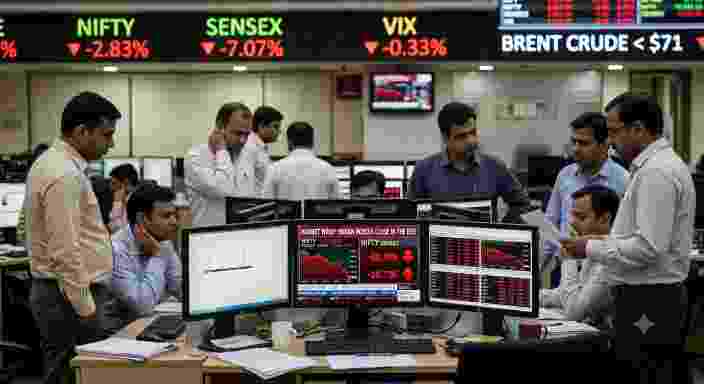
Geopolitical De-escalation and Foreign Inflows Lift Indian Equities: What’s Behind the Rally
- admin
- April 17, 2026
- Uncategorized
- 0 Comments
Indian benchmark indices Sensex and Nifty registered gains on Thursday as markets responded positively to emerging signals of a potential US-Iran diplomatic breakthrough and sustained foreign institutional investor buying. The rally reflects a broader shift in risk sentiment, with geopolitical premium easing and global capital rotating back toward emerging market equities.
New Delhi, April 2025 — Indian equity markets opened the session in positive territory, with the BSE Sensex and NSE Nifty both advancing as investors recalibrated risk assessments following reports of potential de-escalation in US-Iran tensions. Foreign institutional investors, who had turned net sellers during periods of heightened Middle East uncertainty, resumed buying activity, providing crucial support to market breadth.
What Is Driving This Rally?
The immediate catalyst stems from diplomatic overtures between Washington and Tehran, raising expectations of reduced conflict risk in the Persian Gulf region. Crude oil prices, which typically surge during Middle East tensions, have moderated on these reports, directly benefiting India as the world’s third-largest oil importer. Foreign institutional investors recorded net inflows for consecutive sessions, reversing a cautious stance maintained through much of early April. Domestic institutional investors have simultaneously maintained steady accumulation, creating a supportive two-way flow environment.
What Does This Mean for India?
India’s equity markets exhibit acute sensitivity to geopolitical risk premiums, particularly those affecting energy security and current account dynamics. A sustained US-Iran truce would materially improve India’s import bill calculus, potentially saving billions in foreign exchange reserves annually. The rupee, which had faced depreciation pressure during peak tensions, could find stability if oil prices remain contained below $80 per barrel. Corporate earnings projections for energy-intensive sectors—airlines, paints, logistics—stand to benefit from input cost relief.
How Does This Compare Globally?
Indian markets are outperforming several Asian peers in Thursday’s session, reflecting relatively stronger macroeconomic fundamentals and domestic consumption resilience. The last comparable geopolitical relief rally occurred in January 2020, when initial US-Iran tensions briefly spiked before diplomatic channels opened. Emerging market fund managers have increasingly favoured India over China in recent quarters, a trend that accelerating FII inflows may reinforce. MSCI India’s premium valuation relative to MSCI Emerging Markets suggests investors are willing to pay for perceived stability.
- Sensex and Nifty both trading in positive territory on Thursday’s opening session
- FII buying resumed after cautious positioning through early April 2025
- India imports over 85% of its crude oil requirements, making it highly sensitive to Middle East developments
- Brent crude prices moderated on US-Iran truce speculation, easing inflation concerns
- Domestic institutional investors maintained consistent buying through volatility periods
What Should Investors Watch?
Market participants should monitor actual diplomatic progress beyond initial headlines, as previous US-Iran negotiations have collapsed without formal agreements. Crude oil price trajectory remains the most direct transmission mechanism to Indian corporate margins and inflation readings. The Reserve Bank of India’s upcoming policy commentary may incorporate changed geopolitical assumptions into its inflation projections. Sectoral rotation toward oil-sensitive stocks could accelerate if de-escalation proves durable.
Analyst’s View
The current rally carries genuine fundamental support rather than mere sentiment-driven speculation, given the tangible fiscal benefits India accrues from lower energy costs. Investors should distinguish between tactical positioning on geopolitical news and structural allocation decisions based on India’s domestic growth trajectory. The convergence of FII buying, geopolitical de-risking, and stable domestic flows creates a constructive near-term setup, though sustainability depends on diplomatic outcomes proving substantive. Market watchers should track weekly FII flow data and crude oil futures curves for early signals of sentiment shifts.