India-Germany Strategic Recalibration: Why Berlin Has Become Central to New Delhi’s Post-Ukraine European Policy
- admin
- April 15, 2026
- Uncategorized
- 0 Comments
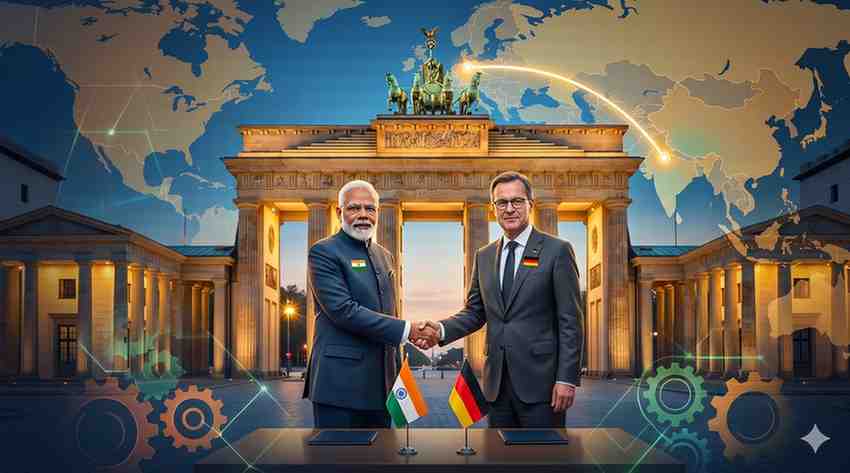
Foreign Secretary Vikram Misri’s engagement with German counterparts signals India’s deliberate pivot toward Berlin as its primary European strategic partner amid shifting transatlantic dynamics. The diplomatic push reflects New Delhi’s recognition that Germany’s evolving security posture and industrial capabilities offer critical leverage in a fragmenting global order.
New Delhi, April 2025 — Foreign Secretary Vikram Misri’s latest consultations with senior German officials represent the most substantive India-Germany diplomatic engagement since Chancellor Olaf Scholz’s 2023 visit, occurring against a backdrop of accelerating geopolitical realignment that has fundamentally altered European security calculations and created new openings for Indian strategic interests.
What Is Driving India’s Deepened Engagement With Germany?
India’s strategic recalibration toward Germany stems from three converging factors: Berlin’s post-Ukraine defence spending surge under the €100 billion Zeitenwende programme, Germany’s search for supply chain alternatives to China, and Washington’s increasingly transactional approach to European allies. New Delhi views Germany as the anchor economy capable of delivering technology transfers, defence partnerships, and market access that France and the UK cannot match at scale. The bilateral trade relationship, valued at approximately €28 billion annually, remains significantly below potential given both economies’ complementary industrial bases.
What Does This Mean For India’s European Strategy?
India’s Germany-first approach represents a calculated departure from its historically diffuse European engagement. New Delhi previously balanced relationships across major EU capitals, but the post-2022 strategic environment demands concentrated diplomatic investment. Germany’s influence over EU trade policy, its role in technology export controls, and its position on the India-EU Free Trade Agreement negotiations make Berlin the essential interlocutor. Foreign Secretary Misri’s discussions likely addressed the stalled FTA talks, which have dragged since 2007 with renewed negotiations beginning in 2022.
How Does Germany Benefit From Closer India Ties?
Berlin’s interest in deepening relations with New Delhi reflects Germany’s urgent need to de-risk from China without sacrificing access to high-growth Asian markets. German automotive manufacturers, chemical giants, and precision engineering firms face overcapacity domestically and see India’s manufacturing expansion under PLI schemes as a critical outlet. Germany’s defence industry, newly unleashed after decades of export restraint, views India as a premier customer for submarines, aircraft components, and military technology co-development.
- India-Germany bilateral trade reached €28 billion in 2023, making Germany India’s largest trading partner in the European Union
- Over 1,800 German companies operate in India, with cumulative FDI exceeding €14 billion since 2000
- Germany’s Zeitenwende programme has allocated €100 billion for defence modernisation, opening new cooperation avenues
- India-EU FTA negotiations, heavily influenced by Berlin, entered their eighth round in late 2024
- Germany hosts approximately 46,000 Indian students, the third-largest international student cohort in the country
What Are The Limitations Of This Partnership?
Structural constraints temper the bilateral potential despite aligned interests. Germany’s coalition politics create unpredictable policy shifts, particularly on human rights conditionality in trade agreements. Berlin’s energy dependence, now redirected from Russian gas toward Gulf LNG, does not naturally align with India’s own energy security priorities. Defence cooperation faces bureaucratic hurdles in both capitals, with German export licensing and Indian procurement processes notorious for delays.
Analyst’s View
The Misri-led diplomatic push should be assessed as infrastructure-building for the next decade rather than immediate deliverables. India is positioning Germany as its gateway to European technology, capital, and strategic alignment precisely as American reliability becomes contested and Chinese competition intensifies. Observers should monitor three indicators: progress on the India-EU FTA by mid-2025, any announcement of major German defence contracts during the anticipated Modi-Scholz bilateral, and Berlin’s stance on technology transfer restrictions affecting Indian semiconductor and green hydrogen ambitions. The relationship’s trajectory will ultimately depend on whether both governments can translate strategic convergence into institutional mechanisms that survive electoral cycles.