Fed Insider Joseph Wang Warns Geopolitical Shocks Could Push Global Economy Toward Recession
- admin
- April 13, 2026
- Uncategorized
- 0 Comments
Former Federal Reserve analyst Joseph Wang has identified geopolitical tensions, elevated energy prices, and weakening US labour markets as converging risks that could trigger a global recession. Wang’s assessment suggests policymakers face a narrowing window to address structural vulnerabilities before external shocks cascade through interconnected financial systems.
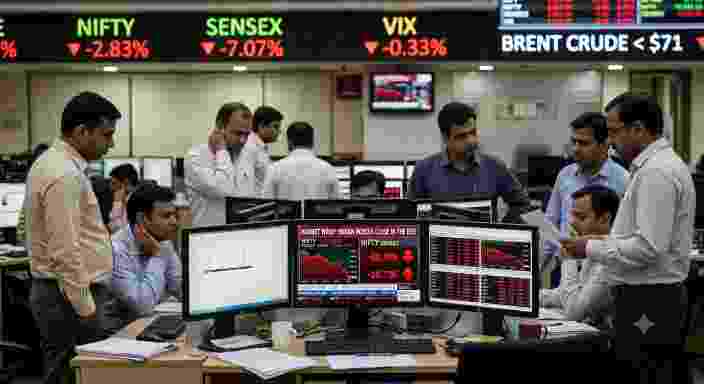
New Delhi, April 2026 — Joseph Wang, a former senior trader at the Federal Reserve’s Open Market Desk and widely followed commentator on monetary policy, has issued a stark warning about the global economic outlook. Speaking on Forward Guidance, Wang emphasised that geopolitical flashpoints — from Middle East instability to great-power competition — now pose recession-level threats to the world economy, with energy price transmission mechanisms representing the most immediate channel of contagion.
What Is Driving These Recession Concerns?
Wang’s analysis centres on the dangerous convergence of three structural weaknesses hitting simultaneously. Geopolitical tensions have disrupted traditional energy supply routes, pushing crude oil and natural gas prices into territory that historically precedes economic contractions. The US labour market, long considered resilient, now shows unmistakable signs of cooling — initial jobless claims have ticked upward, and hiring rates have slowed across multiple sectors. Wang argues that these developments echo pre-recessionary patterns observed in 2007-2008 and early 2020, when seemingly manageable risks compounded rapidly.
What Does This Mean for India?
India’s economic exposure to Wang’s identified risks operates through multiple channels. Energy imports constitute roughly 85% of India’s crude oil consumption, meaning sustained price elevations directly erode current account balances and amplify imported inflation. A US recession would simultaneously dampen demand for Indian IT services and reduce remittance flows from the Gulf and North America. The Reserve Bank of India would face the familiar impossible trinity — defending the rupee, controlling inflation, and supporting growth — with fewer degrees of freedom than in previous cycles.
How Does This Compare Globally?
Emerging markets broadly face asymmetric exposure to Wang’s risk matrix. European economies remain acutely vulnerable to energy supply disruptions given incomplete diversification away from Russian hydrocarbons. China’s property sector overhang limits Beijing’s capacity to provide counter-cyclical stimulus as it did in 2008-2009. The last time energy prices, labour market weakness, and geopolitical instability aligned with comparable intensity was during the 1973-1974 oil shock, which triggered stagflationary recessions across developed economies.
- US initial jobless claims have risen 12% from cycle lows recorded in late 2024
- Brent crude remains elevated above $90 per barrel amid Middle East supply concerns
- India imports approximately 4.5 million barrels of crude oil daily, exposing it to price volatility
- Global shipping costs have increased 180% on Red Sea disruption-affected routes since late 2023
- Wang’s previous Fed warnings in 2022 about quantitative tightening risks proved prescient within months
What Should Investors Watch?
Market participants should monitor three leading indicators Wang has previously highlighted as reliable signals. Credit spreads on high-yield corporate bonds provide early warning of stress before equity markets react. The US Treasury yield curve’s behaviour, particularly the 2-year/10-year spread, has predicted seven of the last eight recessions. Energy-intensive sector earnings guidance — from airlines to chemicals — offers real-economy confirmation of margin pressures that aggregate data may obscure.
Analyst’s View
Wang’s credibility stems from his inside perspective on Federal Reserve operations and his track record of identifying inflection points before consensus recognition. His current assessment suggests the global economy operates with dangerously thin buffers against external shocks. For Indian policymakers and investors, the immediate imperative involves stress-testing portfolios against a scenario where US consumption contracts, energy prices spike, and risk appetite evaporates simultaneously. The RBI’s foreign exchange reserves of approximately $620 billion provide meaningful insulation, but the sequencing of the next six months — particularly decisions from the Fed, OPEC+, and major geopolitical actors — will determine whether Wang’s warnings prove prescient once again.