Economic Sanctions Replace Military Action as Primary Tool of Great Power Competition
- admin
- April 13, 2026
- Uncategorized
- 0 Comments
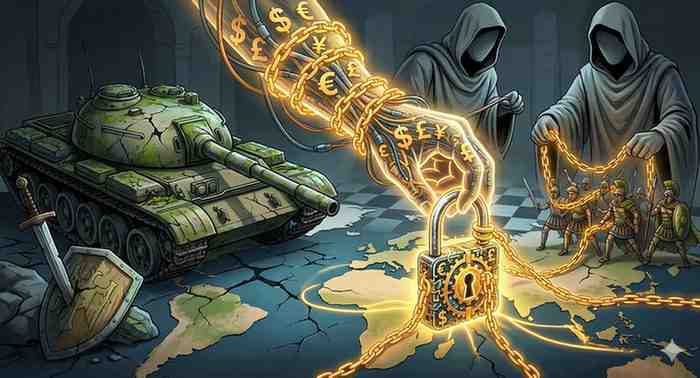
Economic warfare has emerged as the dominant instrument of geopolitical conflict in the 2020s, with trade restrictions, financial sanctions, and technology embargoes increasingly substituting for traditional military confrontation between major powers. Nations are now weaponising interdependence itself, targeting supply chains, payment systems, and critical resource flows to achieve strategic objectives without firing a single shot.
New Delhi, April 2026 — The global economic order is undergoing a fundamental transformation as economic coercion becomes the preferred battlefield for great power rivalry, forcing nations including India to recalibrate their strategic calculus around trade dependencies, currency reserves, and technology partnerships.
What Is Driving the Shift Toward Economic Warfare?
The proliferation of economic weapons stems from three converging factors: nuclear deterrence making conventional war between major powers prohibitively risky, deepening global integration creating exploitable vulnerabilities, and domestic political constraints limiting appetite for military casualties. The United States has deployed sanctions against over 12,000 entities globally as of 2025, up from approximately 2,000 in 2010. China’s Belt and Road Initiative has similarly evolved from development finance into a tool of economic leverage, with debt servicing obligations granting Beijing influence over strategic infrastructure in over 140 countries.
What Does This Mean for India?
India occupies a uniquely exposed position in this new paradigm, maintaining deep economic ties with both the Western bloc and Russia-China axis while refusing formal alliance commitments. New Delhi’s dependence on Russian defence equipment, American technology investment, and Chinese pharmaceutical inputs creates multiple pressure points that rival powers could exploit. The Reserve Bank of India’s push for rupee internationalisation and bilateral currency settlement mechanisms reflects growing awareness of SWIFT-based financial system vulnerabilities. India’s semiconductor manufacturing ambitions under the Production Linked Incentive scheme represent a strategic hedge against technology weaponisation.
How Does This Compare to Historical Precedents?
Economic warfare is not novel, but its scope and sophistication are unprecedented. The 1973 OPEC oil embargo demonstrated commodity weaponisation, while Western sanctions on Iran from 2012 showcased financial system leverage. Current conditions differ qualitatively: technology supply chains have become as strategically significant as energy supplies, and digital infrastructure creates new attack surfaces from undersea cables to cloud computing dependencies. The last comparable systemic shift occurred in the 1930s, when competitive devaluations and trade barriers contributed to global economic collapse and eventual military conflict.
- Global trade restrictions increased 340% between 2019 and 2025, according to Global Trade Alert data
- Over $1.2 trillion in foreign assets have been frozen under Western sanctions regimes since 2022
- China controls processing of over 60% of critical minerals essential for electronics and clean energy
- India’s import dependence for semiconductors exceeds 95%, creating acute supply chain vulnerability
- BRICS nations now account for 35% of global GDP, providing alternative economic architecture
What Should Investors and Policymakers Watch?
Market participants must now incorporate geopolitical risk premiums into valuations across sectors from pharmaceuticals to financial services. Supply chain resilience has become a board-level priority, with firms diversifying manufacturing footprints despite efficiency losses. Central banks globally are accumulating gold reserves at record rates, signalling hedging against potential currency weaponisation. India’s strategic petroleum reserves, forex diversification, and friend-shoring initiatives warrant monitoring as leading indicators of perceived vulnerability.
Analyst’s View
Economic warfare’s ascendance signals a prolonged period of deglobalisation and bloc formation, with India positioned as a pivotal swing state that both camps will court aggressively. The critical variable remains whether economic coercion proves as effective as its proponents believe; sanctions rarely achieve regime change but frequently inflict humanitarian costs while accelerating target nations’ self-sufficiency drives. New Delhi’s strategic autonomy doctrine faces its sternest test yet, requiring navigation between economic efficiency and security redundancy. Watch for escalation triggers: semiconductor export controls, critical mineral restrictions, and payment system fragmentation will define the next phase of this conflict.