Trump’s Iran Pressure Campaign Risks Global Supply Chain Disruptions and Emerging Market Volatility
- admin
- April 12, 2026
- Uncategorized
- 0 Comments
The Trump administration’s intensified economic and military pressure on Iran is creating ripple effects across global energy markets, trade corridors, and emerging market currencies. For India, the escalation threatens crude oil price stability, rupee volatility, and the viability of strategic infrastructure investments including the Chabahar Port project.
New Delhi, April 2026 — Global crude oil futures surged past $92 per barrel this week as markets priced in heightened conflict risk in the Persian Gulf, with Brent crude recording its sharpest weekly gain since the 2022 Ukraine crisis. The escalation follows expanded secondary sanctions targeting Iran’s oil exports, shipping networks, and financial intermediaries, effectively forcing trading partners across Asia and Europe to reassess their energy procurement strategies.
What Is Driving the Current Escalation?
The Trump administration has adopted a maximum pressure doctrine that combines expanded sanctions on Iranian crude buyers with increased naval deployments in the Strait of Hormuz. Washington’s objective centres on forcing Tehran to renegotiate its nuclear programme and curtail regional proxy activities. The strategy echoes the 2018-2020 sanctions regime but operates in a fundamentally different geopolitical environment, with China and Russia providing alternative payment channels and crude offtake commitments to Tehran. Iran’s oil exports, which collapsed to under 500,000 barrels per day during the first Trump term, had recovered to approximately 1.5 million barrels per day through shadow fleet operations before this latest crackdown.
What Does This Mean for India?
India’s energy security calculus faces immediate pressure as the country imports over 85 percent of its crude oil requirements. Indian refiners had cautiously resumed Iranian crude purchases through rupee-rial settlement mechanisms established after 2019, but fresh sanctions designations are forcing state-owned companies to seek alternative suppliers at premium prices. The Chabahar Port project, India’s strategic gateway to Afghanistan and Central Asia that received a sanctions waiver in 2024, now faces renewed uncertainty as US officials signal a harder line on all Iran-linked infrastructure. The rupee has already depreciated 1.8 percent against the dollar in April, with currency traders citing Gulf risk premiums.
How Are Global Markets Responding?
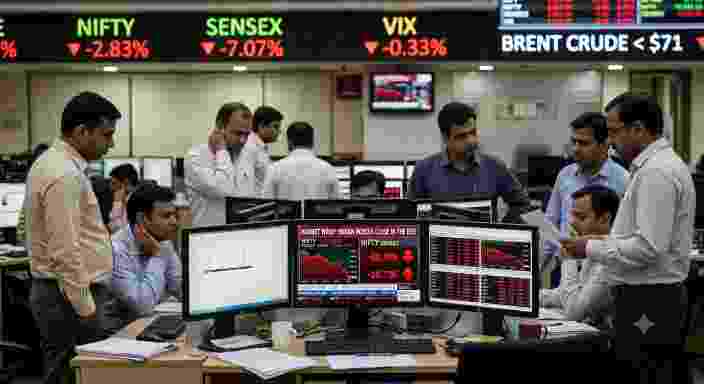
Financial markets are exhibiting classic risk-off behaviour, with emerging market equity indices underperforming developed market benchmarks by 340 basis points month-to-date. Shipping and insurance costs for tankers transiting the Strait of Hormuz have increased by approximately 45 percent, adding to inflationary pressures across Asian manufacturing hubs. Gold prices have breached $2,400 per ounce as institutional investors seek safe-haven allocations.
- Brent crude has risen 18 percent since February 2026, with Goldman Sachs projecting $105 per barrel under sustained escalation scenarios
- India’s current account deficit is projected to widen by 0.4 percentage points of GDP for every $10 increase in average crude prices
- The Strait of Hormuz handles approximately 21 percent of global petroleum liquids trade, equivalent to 20.5 million barrels daily
- Foreign portfolio investors have withdrawn $3.2 billion from Indian equities in April alone, the highest monthly outflow since October 2023
- Iran’s shadow tanker fleet comprises an estimated 400 vessels operating under flags of convenience
What Should Investors Watch?
Market participants should monitor three key indicators in the coming weeks: the US Treasury’s Office of Foreign Assets Control designation lists for secondary sanctions enforcement, OPEC+ production quota adjustments in response to supply disruptions, and Reserve Bank of India intervention patterns in the currency forwards market. Corporate earnings guidance from Indian oil marketing companies and aviation firms will provide early signals of margin compression. Any military incident in the Gulf shipping lanes would trigger immediate circuit-breaker risks across Asian equity markets.
Analyst’s View
The current Iran confrontation represents a structural shift rather than a transient geopolitical flare-up, with implications extending well beyond energy markets. India’s strategic hedging between Washington’s sanctions architecture and its own energy and connectivity imperatives will face its most significant stress test since 2019. The RBI’s foreign exchange reserves of $640 billion provide substantial cushion, but sustained crude above $100 would force difficult fiscal choices between fuel subsidies and capital expenditure commitments. Institutional investors should position for elevated volatility through the third quarter while maintaining exposure to domestic consumption themes less correlated with global risk cycles.