US Iran Sanctions Escalation Threatens Global Oil Markets and Indian Refining Economics
- admin
- April 11, 2026
- Uncategorized
- 0 Comments
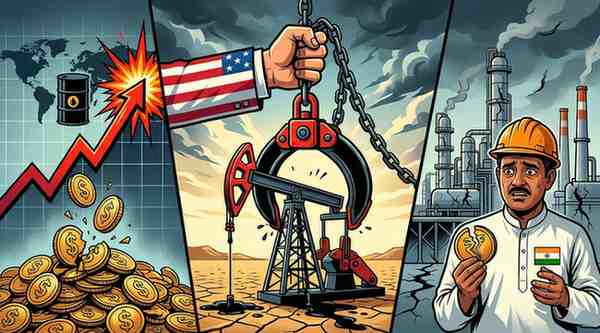
The Trump administration’s intensified sanctions campaign against Iran is destabilising global crude markets, pushing Brent prices toward volatility levels not seen since 2022 and threatening import-dependent economies including India. Indian refiners face margin compression and supply chain disruption as alternative crude sources command premium pricing amid tightening global supply.
New Delhi, April 2025 — The latest round of US maximum pressure sanctions targeting Iran’s oil exports has triggered a 12% spike in crude volatility indices over the past fortnight, with Brent futures oscillating between $78 and $89 per barrel as traders price in supply disruption scenarios across the Persian Gulf.
What Is Driving the Current Oil Market Instability?
The Trump administration has expanded secondary sanctions targeting any entity facilitating Iranian crude transactions, effectively closing loopholes that allowed Chinese and Indian refiners limited access to discounted Iranian barrels. Washington has simultaneously designated additional Iranian ports, shipping companies, and financial intermediaries, creating legal jeopardy for global commodity traders. The policy mirrors the 2018-2019 maximum pressure campaign but operates in a tighter global supply environment following OPEC+ production discipline. Market participants report that risk premiums on Middle Eastern crude have expanded by $3-4 per barrel since sanctions intensification began.
What Does This Mean for India’s Energy Security?
India imported approximately 4.5 million barrels per day in FY2024, with the Middle East supplying over 60% of requirements. Indian refiners had quietly resumed Iranian crude purchases through rupee-dirham settlement mechanisms, accessing discounts of $8-10 per barrel below benchmark prices. The sanctions escalation forces Indian Oil Corporation, Bharat Petroleum, and Reliance Industries to pivot toward costlier alternatives from Saudi Arabia, Iraq, and Russia. The Reserve Bank of India estimates every $10 increase in crude prices adds 40-50 basis points to headline inflation and widens the current account deficit by approximately $15 billion annually.
How Does This Compare to Previous Sanctions Episodes?
The 2018 sanctions campaign eventually removed 1.5 million barrels per day of Iranian supply from global markets, contributing to Brent touching $86 in October 2018. Current global spare capacity stands at approximately 3 million barrels per day, concentrated almost entirely within Saudi Arabia and the UAE. Unlike 2018, today’s sanctions operate alongside Russia-related supply constraints and Houthi disruptions to Red Sea shipping. The compounding effect creates structural tightness that amplifies price responses to any additional supply threats.
- Iran exported approximately 1.3 million barrels per day in Q1 2025, primarily to China via ship-to-ship transfers
- Global crude inventories stand at 4.2 billion barrels, roughly 5% below the five-year average
- India’s strategic petroleum reserves hold 39 million barrels, covering approximately 9 days of consumption
- Shipping insurance rates for Persian Gulf tankers have increased 180% since March 2025
- The Indian rupee has depreciated 2.3% against the dollar since sanctions announcement
What Should Investors and Policymakers Watch?
Oil marketing companies listed on Indian exchanges face near-term margin pressure if administered fuel prices remain frozen ahead of state elections. Upstream producers including ONGC may benefit from elevated realisations, though regulatory windfall mechanisms could cap gains. The Ministry of Petroleum is reportedly exploring expanded term contracts with Guyana and Brazil to diversify away from Middle Eastern concentration. Currency markets will scrutinise RBI intervention capacity as crude-driven dollar demand pressures foreign exchange reserves.
Analyst’s View
The sanctions escalation represents a structural shift rather than a transient disruption, with Washington demonstrating willingness to accept global economic friction as acceptable cost for Iran policy objectives. Indian policymakers face difficult trade-offs between energy affordability, inflation management, and strategic autonomy in crude sourcing. The coming quarter will test whether diplomatic channels can secure India-specific waivers similar to those granted in 2018, or whether New Delhi must accelerate its pivot toward renewable capacity and strategic reserve expansion. Fund managers should position for sustained crude volatility and monitor refining margins as leading indicators of downstream profitability pressures.