How India Navigates the U.S.-Israel-Iran Standoff Without Alienating Any Side
- admin
- April 11, 2026
- Uncategorized
- 0 Comments
India faces an acute diplomatic balancing act as escalating tensions between the United States, Israel, and Iran threaten to destabilise a region critical to its energy security and diaspora interests. New Delhi’s strategic autonomy doctrine is being tested by mounting pressure to choose sides in a conflict where neutrality carries its own costs.
New Delhi, April 2025 — The intensification of hostilities in West Asia has placed India squarely at the intersection of competing great-power interests, forcing policymakers to recalibrate a decades-old approach to regional diplomacy. India imports approximately 40% of its crude oil from the Persian Gulf, maintains defence partnerships with Israel worth over $1 billion annually, and hosts nearly 9 million citizens in Gulf Cooperation Council countries — a trifecta of vulnerabilities that no other major economy must simultaneously manage.
What Is Driving the Current Tensions?
The U.S.-Israel-Iran triangle has entered its most volatile phase since the 2020 Soleimani assassination. Washington’s renewed maximum pressure campaign against Tehran, combined with Israel’s expanded military operations against Iranian proxies, has created a regional tinderbox. Iran’s advancement toward weapons-grade uranium enrichment — now reportedly at 60% purity — has accelerated Israeli contingency planning for pre-emptive strikes. India’s historical ties with all three parties complicate any attempt to distance itself from the fallout.
What Does This Mean for India’s Energy Security?
India’s energy import bill remains acutely sensitive to Persian Gulf disruptions. The Strait of Hormuz handles roughly 20% of global oil transit, and any military escalation could trigger a supply shock reminiscent of the 1973 oil crisis. India has diversified suppliers since the 2019 Iran sanctions, increasing purchases from Russia and the UAE, but structural dependence on Gulf hydrocarbons persists. The strategic petroleum reserve at Mangalore and Visakhapatnam holds only 12 days of consumption — insufficient cover against prolonged disruption.
How Is India Managing Its Multi-Alignment Strategy?
India’s diplomatic response has relied on compartmentalisation: maintaining defence procurement from Israel, pursuing Chabahar port development with Iran, and deepening the Quad partnership with Washington. External Affairs Minister S. Jaishankar has repeatedly articulated India’s refusal to view relationships through a zero-sum lens. The I2U2 grouping — India, Israel, UAE, and the United States — exemplifies New Delhi’s attempt to build issue-specific coalitions without formal alliance commitments. This approach worked during periods of manageable tension but faces stress-testing when conflicts demand explicit positioning.
- India-Israel bilateral trade reached $7.5 billion in FY2024, with defence comprising 35% of imports
- Approximately 18 million Indian diaspora members reside in countries directly affected by Gulf instability
- Chabahar port’s first phase, operational since 2018, handled 2.1 million tonnes of cargo in 2024
- India’s crude oil import dependency stands at 87%, the highest among major Asian economies
- Remittances from GCC countries totalled $52 billion in 2024, representing 2.8% of GDP
What Should Policymakers and Investors Watch?
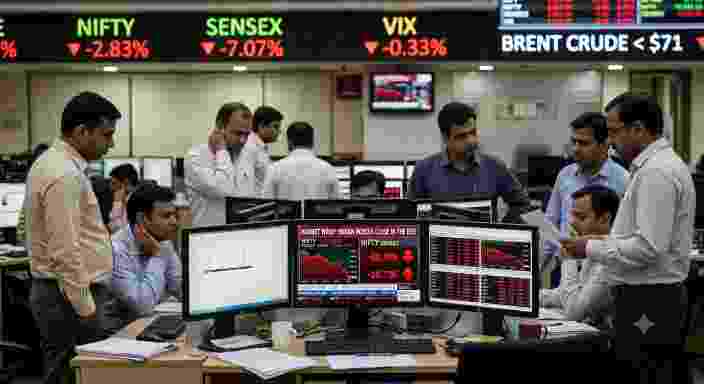
Three indicators merit close monitoring: OPEC+ production decisions in response to supply fears, U.S. sanctions waivers for Indian entities engaged with Iran, and any disruption to the UAE-India Comprehensive Economic Partnership Agreement implementation. Investors in Indian oil marketing companies and aviation stocks should factor in elevated geopolitical risk premiums. The rupee’s sensitivity to crude prices means currency volatility could resurface if Brent crosses the $100 threshold.
Analyst’s View
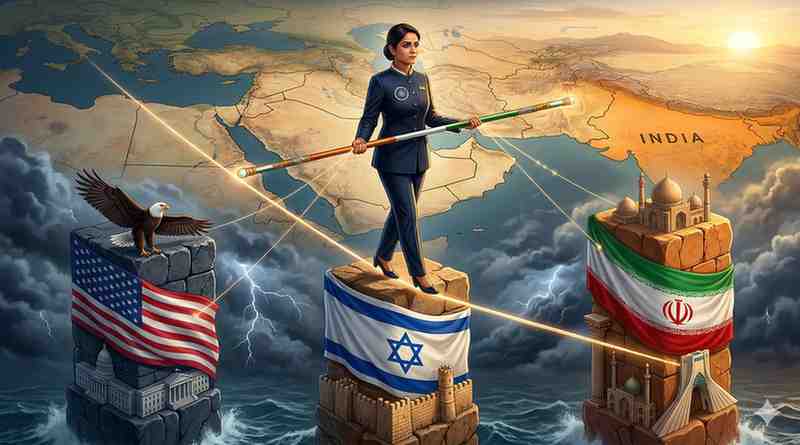
India’s strategic autonomy will face its sternest examination if the U.S.-Israel-Iran confrontation escalates into direct military engagement. New Delhi possesses neither the leverage nor the inclination to mediate, but its economic interests demand active crisis management rather than passive observation. The government’s quiet diplomacy — maintaining channels with Tehran while accelerating defence ties with Tel Aviv — represents tactical prudence but not long-term strategy. Watch for any shift in India’s UN voting patterns or public statements as leading indicators of which direction the tightrope walker is leaning.