Why RBI Held Rates Steady Despite Inflation Pressures: Navigating Middle East Uncertainty
- admin
- April 9, 2026
- Uncategorized
- 0 Comments
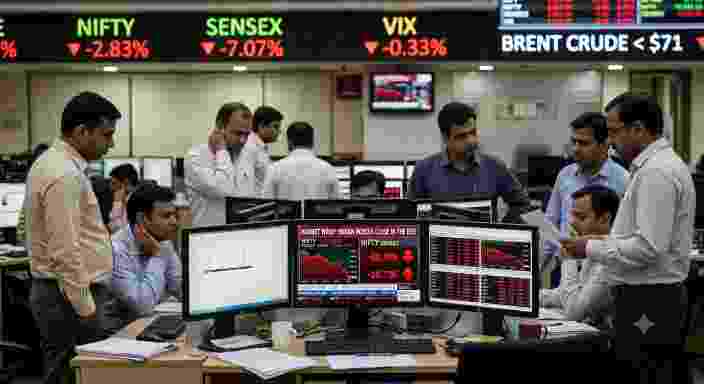
The Reserve Bank of India maintained its benchmark repo rate unchanged as escalating Middle East tensions create simultaneous risks to economic growth and price stability. RBI’s decision reflects a calculated pause to assess how geopolitical volatility might transmit through oil prices, trade disruptions, and capital flows before committing to any directional policy shift.
New Delhi, April 2025 — The Reserve Bank of India’s Monetary Policy Committee voted to hold the repo rate steady, prioritising macroeconomic stability over pre-emptive action as the Middle East crisis injects fresh uncertainty into India’s growth-inflation dynamics. This marks a strategic pivot from the central bank’s recent accommodative tilt, acknowledging that external shocks now outweigh domestic considerations in the policy calculus.
What Is Driving RBI’s Decision to Hold Rates?
The Middle East conflict has introduced a dual-edged risk that complicates conventional monetary response. Rising crude oil prices threaten to reignite inflationary pressures just as consumer price growth was trending toward RBI’s 4% target. Simultaneously, prolonged geopolitical instability could dampen export demand and foreign investment inflows, undermining India’s 6.5-7% GDP growth trajectory. RBI Governor’s statement emphasised “watchful waiting” — a posture last adopted during the 2019 US-China trade war escalation when global uncertainty similarly paralysed central bank action.
What Does This Mean for India’s Economy?
India imports roughly 85% of its crude oil requirements, making the economy acutely vulnerable to supply disruptions and price spikes originating from West Asia. Each $10 per barrel increase in Brent crude historically adds 30-40 basis points to headline inflation and widens the current account deficit by approximately 0.4% of GDP. The rate hold signals RBI’s reluctance to stimulate domestic demand when imported inflation could quickly erode any growth benefits. Corporate borrowers seeking cheaper credit will find their expectations deferred until geopolitical clarity emerges.
How Does India’s Stance Compare Globally?
Major central banks are exhibiting similar caution amid intersecting global risks. The US Federal Reserve has signalled fewer rate cuts than markets anticipated, while the European Central Bank remains constrained by energy price sensitivity. India’s position differs materially — unlike developed economies battling demand-side inflation, RBI must manage supply-shock vulnerability while sustaining one of the world’s fastest growth rates. This asymmetry explains why RBI avoided both hawkish tightening and dovish cuts, opting instead for strategic ambiguity.
- Repo rate held at 6.5% for the second consecutive policy meeting
- India’s crude oil import dependency stands at approximately 85% of total consumption
- Brent crude prices have risen 12% since Middle East tensions escalated in March 2025
- RBI’s inflation projection remains at 4.5% for FY2025-26, contingent on stable oil prices
- Foreign portfolio investors withdrew ₹18,200 crore from Indian equities in the past fortnight amid risk-off sentiment
What Should Investors and Businesses Watch?
Currency markets will provide the earliest signal of stress transmission, with the rupee’s movement against the dollar reflecting real-time capital flow sentiment. Bond yields on 10-year government securities may harden if inflation expectations shift upward, compressing equity valuations in rate-sensitive sectors like banking and real estate. Importers should consider hedging strategies given rupee depreciation risks, while export-oriented firms may find margin relief if the currency weakens sustainably.
Analyst’s View
RBI’s rate hold represents prudent risk management rather than policy paralysis. The central bank has preserved optionality — retaining space to cut rates if growth falters or hike if inflation breaches tolerance bands. Market participants should monitor three triggers: Brent crude sustaining above $95 per barrel, rupee breaching 84.5 against the dollar, or food inflation spiking on monsoon disruptions. The next MPC meeting in June will likely prove decisive, by which point Middle East developments and Q4 GDP data will clarify India’s policy path. Until then, RBI has chosen strategic patience over reactive intervention.