Wells Fargo Abandons 2026 Rate Cut Outlook as Geopolitical Risks Reshape Federal Reserve Calculus
- admin
- April 7, 2026
- Uncategorized
- 0 Comments
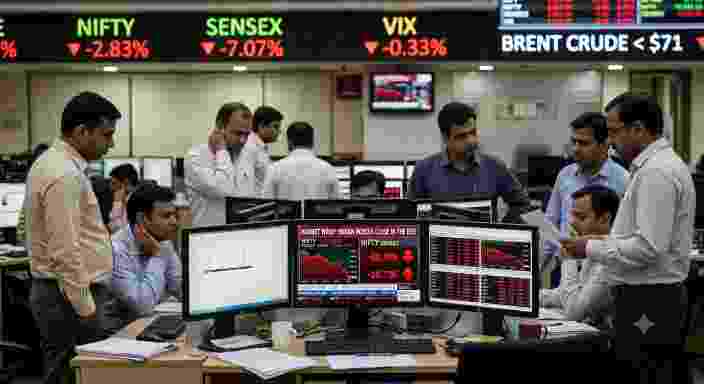
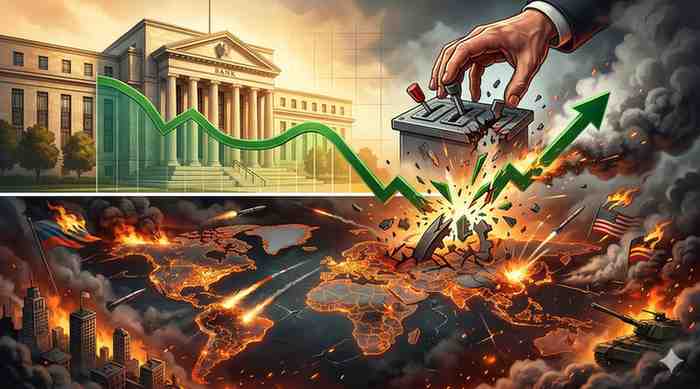
Wells Fargo has withdrawn its forecast for Federal Reserve interest rate cuts in 2026, citing escalating geopolitical tensions and war-related risks that could sustain inflationary pressures longer than previously anticipated. The reversal marks a significant shift in Wall Street’s monetary policy expectations and signals potential headwinds for emerging market capital flows, including to India.
New Delhi, April 2026 — Wells Fargo’s decision to scrap its 2026 Fed rate cut projection represents the first major Wall Street forecast revision driven primarily by geopolitical rather than macroeconomic variables, underscoring how armed conflicts and trade tensions have become central inputs in monetary policy modelling.
What Is Driving Wells Fargo’s Forecast Reversal?
Wells Fargo economists have concluded that persistent war-related supply chain disruptions will keep commodity prices elevated through 2026, preventing the Federal Reserve from achieving its 2% inflation target. Defence spending surges across NATO economies are adding fiscal stimulus at precisely the moment central banks seek demand cooling. Energy price volatility, particularly in crude oil and natural gas markets, has introduced forecasting uncertainty that renders traditional rate path projections unreliable. The bank’s previous baseline assumed conflict de-escalation by mid-2025 — an assumption now deemed overly optimistic.
What Does This Mean for India?
India’s Reserve Bank faces a more constrained policy environment if the Federal Reserve maintains rates at current levels through 2026. Rupee depreciation pressure will intensify as yield differentials between US Treasuries and Indian government securities remain elevated, potentially forcing the RBI to defend currency stability over growth stimulus. Foreign portfolio investors withdrew $18 billion from Indian equities during the last Fed tightening cycle in 2022-23, and sustained high US rates risk repeating that capital flight pattern. Indian corporate borrowers with dollar-denominated debt face refinancing at significantly higher costs than budgeted.
How Does This Compare to Previous Fed Forecast Shifts?
Wells Fargo’s revision echoes the September 2022 pivot when multiple banks abandoned soft-landing scenarios after the Fed’s aggressive 75-basis-point hikes. The current reversal differs fundamentally because geopolitical factors, not domestic economic data, are driving the reassessment. Historical precedent from the 1970s oil shocks suggests war-driven inflation can persist 18-24 months longer than demand-driven price surges. Markets last priced in zero Fed cuts for a full calendar year during the 2006-2007 cycle, immediately preceding the global financial crisis.
- Wells Fargo previously forecast three 25-basis-point Fed cuts in 2026, totalling 75 basis points of easing
- Federal funds rate currently stands at 4.75-5.00%, the highest sustained level since 2007
- Global defence spending reached $2.4 trillion in 2025, up 9% year-on-year
- Brent crude has averaged $94 per barrel in 2026, compared to $82 in 2024
- US 10-year Treasury yields remain above 4.6%, maintaining pressure on emerging market currencies
What Should Investors Watch?
Currency hedging costs for Indian importers will likely rise if other major banks follow Wells Fargo’s revision. Sector rotation away from rate-sensitive stocks — real estate, infrastructure, and banking — may accelerate in both US and Indian markets. Bond fund managers face duration risk if the higher-for-longer scenario extends beyond current portfolio positioning. Export-oriented Indian IT and pharmaceutical firms may benefit from rupee weakness, partially offsetting broader market headwinds.
Analyst’s View
Wells Fargo’s forecast abandonment signals that geopolitical risk premiums are becoming permanent features of monetary policy calculus rather than temporary disruptions. Indian policymakers should prepare for a scenario where external financial conditions remain restrictive regardless of domestic inflation trajectory. The key variable to monitor is whether Goldman Sachs and JPMorgan revise their own Fed projections within the next 30 days — consensus formation around a no-cut 2026 would fundamentally alter capital allocation across emerging markets. Portfolio managers should stress-test holdings against a 5% Fed funds rate persisting into 2027.