Moscow’s South Asia Push: How Russia Is Rewriting Energy and Trade Corridors to Bypass Western Sanctions
- admin
- April 7, 2026
- Uncategorized
- 0 Comments
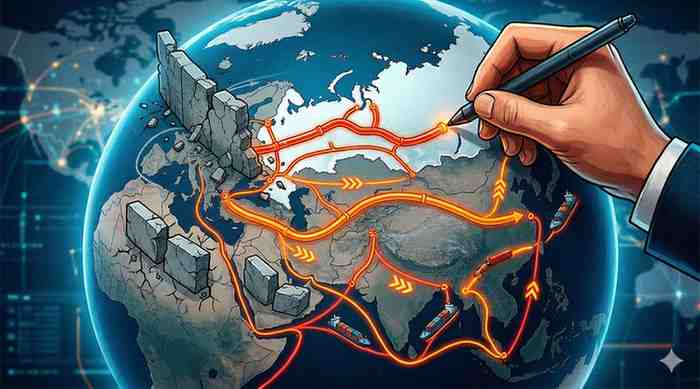
Russia is aggressively expanding energy exports, trade routes and strategic partnerships across South Asia as Western sanctions force Moscow to redirect its economic relationships eastward. India, Pakistan and Bangladesh have emerged as critical nodes in this reconfiguration, with bilateral trade volumes, discounted oil purchases and infrastructure investments reaching unprecedented levels since 2022.
New Delhi, April 2026 — Russia’s crude oil exports to India have surged by over 1,400 percent since the Ukraine conflict began, transforming Moscow into New Delhi’s largest oil supplier and fundamentally altering energy trade patterns that had remained stable for decades. Russian seaborne crude now accounts for approximately 35 percent of India’s total oil imports, displacing traditional suppliers from the Gulf region and creating new payment mechanisms that circumvent dollar-denominated transactions.
What Is Driving Russia’s South Asia Pivot?
Western sanctions have compelled Russia to seek alternative markets for hydrocarbons that previously flowed to Europe. South Asia presents a population base exceeding 1.9 billion people with growing energy demands and governments willing to prioritise economic pragmatism over geopolitical alignment with Washington. Russia’s strategic calculus involves converting temporary discount-driven relationships into durable infrastructure dependencies through pipeline projects, nuclear power plant construction and arms sales. Moscow views South Asia as essential to its long-term strategy of building a sanctions-resistant economic architecture.
What Does This Mean for India’s Strategic Autonomy?
India’s engagement with Russia tests the boundaries of its multi-alignment foreign policy doctrine. New Delhi has secured significant cost savings — estimated at USD 8-10 billion annually — through discounted Russian crude purchases, providing fiscal headroom during a period of global economic uncertainty. Indian refiners have developed sophisticated rupee-rouble payment channels and ship-to-ship transfer mechanisms that reduce exposure to secondary sanctions. However, deepening energy dependence on Russia creates vulnerabilities should Moscow demand political concessions or should Western pressure intensify on Indian financial institutions.
How Are Other South Asian Nations Responding?
Pakistan and Bangladesh have pursued their own engagements with Moscow, though at smaller scales. Pakistan’s Russian oil imports, while modest, represent a diplomatic breakthrough after decades of estrangement dating to the Soviet-Afghan conflict. Bangladesh has negotiated nuclear cooperation agreements and fertiliser supply contracts that address critical agricultural input shortages. Sri Lanka has explored barter arrangements for fuel supplies during its economic crisis. Russia is methodically building a network of bilateral relationships that reduces each country’s reliance on Western-dominated financial systems.
- Russia-India bilateral trade reached USD 65 billion in 2024, up from USD 13 billion in 2021
- India imported approximately 1.9 million barrels per day of Russian crude in early 2026
- Rosneft and Indian Oil Corporation signed a 10-year supply agreement covering 500,000 bpd
- Russian fertiliser exports to South Asia increased 180 percent since 2022
- The International North-South Transport Corridor (INSTC) reduced Russia-India shipping times by 40 percent
What Should Investors and Policymakers Watch?
Currency settlement mechanisms represent the most consequential development for global financial architecture. India’s rupee trade settlement framework with Russia could expand to other sanctioned or semi-sanctioned economies, gradually eroding dollar hegemony in regional commerce. Energy infrastructure investments — including the proposed Russia-Pakistan gas pipeline through Afghanistan — carry execution risks but signal long-term strategic intent. Financial institutions with exposure to India-Russia trade corridors face increasing compliance complexity as Western regulators scrutinise potential sanctions evasion.
Analyst’s View
Russia’s South Asia engagement has evolved from opportunistic sanctions arbitrage into a structural realignment of Eurasian economic geography. The sustainability of this pivot depends on whether Moscow can offer value beyond discounted commodities — technology transfer, defence manufacturing partnerships and connectivity infrastructure will determine whether these relationships deepen or plateau. India holds the pivotal position: its choices will shape whether South Asia becomes an integrated component of a Russia-China economic sphere or maintains balanced engagement across competing blocs. Monitor the INSTC throughput volumes, rupee-rouble exchange stability and any secondary sanctions targeting Indian refiners as leading indicators of this strategic trajectory.