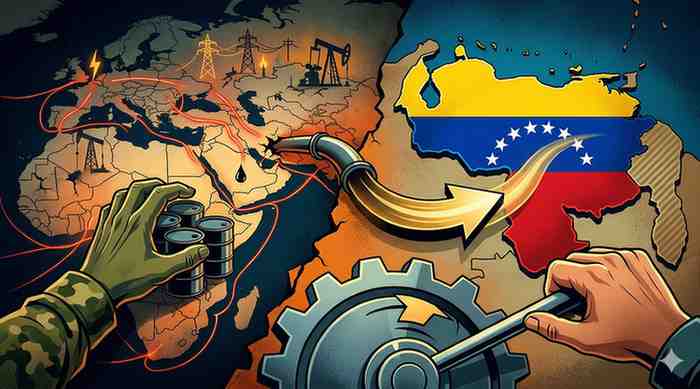
Energy Crisis: The “Oil War” Narrative and the Venezuelan Pivot
- Editor
- April 6, 2026
- Uncategorized
- 0 Comments
New Delhi, April 2026 — As global instability fractures traditional trade routes, a new “Oil War” narrative is taking hold of the energy sector. While geopolitical tensions have historically dictated energy alliances, the current crisis is forcing global powers—including India and the U.S.—into a series of pragmatic, high-stakes pivots to secure their fuel reserves.
The Venezuelan Resurgence: A Six-Year High
Venezuela has emerged as the unexpected anchor of global energy stability. Following years of crippling sanctions, Venezuelan oil exports have surged to a six-year high, hitting volumes not seen since 2019.
The shift comes as a direct response to the supply vacuum left by the Iran-U.S. conflict and the subsequent maritime blockade of the Middle East. With “traditional” sources offline or in high-risk zones, the world has turned its eyes back to South America. For Caracas, this is more than just an export boom; it is a re-entry into the global economic mainstream, fueled by a world desperate for heavy crude.
India’s Strategy: Quadrupling Venezuelan Imports
India has executed the most aggressive strategic shift in its energy history. To stabilize rising domestic prices and ensure industrial continuity, India has quadrupled its purchase of Venezuelan oil, officially overtaking the United States as the primary buyer of the nation’s crude.
By securing these massive volumes, New Delhi is attempting to insulate the Indian economy from the volatility of the Middle East. Indian refineries, particularly those along the eastern coast, have been recalibrated to handle Venezuelan heavy crude, allowing the country to build a significant buffer against global price shocks that have already pushed Brent crude toward the $125 mark.
The Russian Paradox: A 90% Surge in U.S. Imports
In a development that has stunned strategic analysts, U.S. imports of Russian oil reportedly surged by 90% in March 2026.
Despite the ongoing public rhetoric of energy independence and sanctions, the reality of a shrinking global supply chain has forced Washington’s hand. This temporary spike is being viewed as a tactical maneuver to curb domestic fuel inflation. By utilizing specific regulatory waivers, the U.S. is quietly absorbing Russian supply to keep its own economy from stalling, highlighting the brutal pragmatism that now defines the global “Oil War.”
Energy Shift: Tracking the New Flow
| Country | Key Movement | Strategic Intent |
|---|---|---|
| India | Quadrupled Venezuelan imports | Securing long-term supply; reducing Middle East dependence. |
| United States | 90% increase in Russian imports | Domestic price control amidst West Asia instability. |
| Venezuela | Export volumes at 6-year peak | Capitalizing on the global supply vacuum to rebuild economy. |
| Middle East | Significant production drop | Direct result of regional conflict and shipping blockades. |
Export to Sheets
Bottom Line
The “Oil War” of 2026 has stripped away the veneer of geopolitical idealism. In a race to prevent an energy blackout, the world’s largest economies are no longer choosing their suppliers based on political alignment, but on availability and volume. India’s move to dominate the Venezuelan market and the U.S.’s reliance on Russian waivers prove that in the current crisis, energy security is the only currency that matters. The map of global energy has been redrawn, and for now, it is a map of survival.