Why Indian Equities Shed ₹8 Lakh Crore in a Single Session: Anatomy of the April 2025 Selloff
- admin
- April 3, 2026
- Uncategorized
- 0 Comments
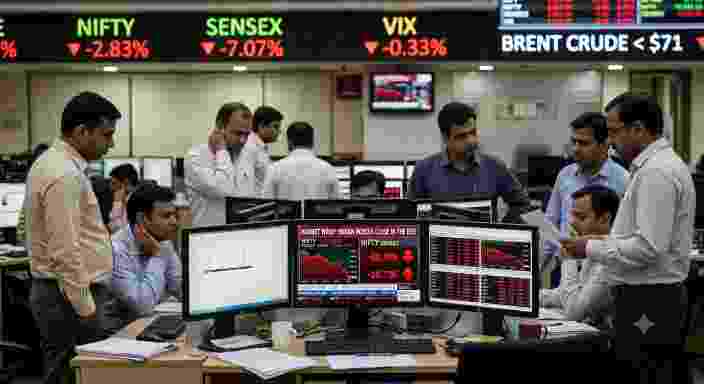
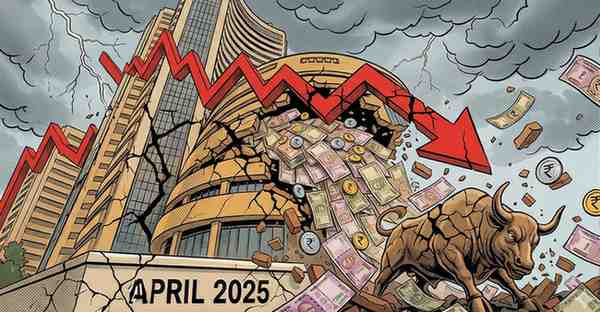
Indian benchmark indices suffered their steepest single-day decline in over five months on April 2, 2025, with the Sensex plunging 1,500 points and the Nifty 50 cracking 2% amid a confluence of global risk-off sentiment and domestic profit-booking. The selloff, which erased approximately ₹8 lakh crore in investor wealth, reflects heightened anxiety over US tariff escalations, stretched valuations, and foreign institutional investor outflows.
New Delhi, April 2025 — The carnage on Dalal Street unfolded with unusual velocity, as the Sensex breached multiple technical support levels within the first hour of trading, eventually closing approximately 1,500 points lower in what traders described as a capitulation-driven session with minimal buying interest at any level.
What Is Driving This Market Correction?
The selloff stems from a toxic combination of external shocks and internal fragilities converging simultaneously. Global markets entered risk-off mode following renewed US tariff announcements targeting Asian exports, reviving fears of a broader trade conflict reminiscent of the 2018-2019 period. Foreign institutional investors, who had already withdrawn over ₹12,000 crore from Indian equities in March 2025, accelerated their exit amid dollar strength and rising US Treasury yields. Domestic institutional buying, which had provided crucial support during previous corrections, proved insufficient to absorb the selling pressure.
What Does This Mean for Indian Investors?
Retail investors, who constitute nearly 45% of daily trading volumes, face significant portfolio erosion particularly in mid-cap and small-cap segments where losses exceeded 3-4%. Systematic Investment Plan inflows, while structurally resilient, cannot counterbalance aggressive FII selling in the short term. The correction has pushed the Nifty 50’s price-to-earnings multiple from 22x to approximately 20.5x, bringing valuations closer to their five-year average but still above emerging market peers. Portfolio rebalancing toward defensive sectors—FMCG, pharmaceuticals, and utilities—emerged as the dominant institutional strategy by afternoon trade.
How Does This Compare to Previous Market Shocks?
The magnitude of this single-session decline rivals the March 2020 pandemic crash and the September 2024 correction following US Federal Reserve hawkishness. Unlike those episodes, the current selloff lacks a singular catastrophic trigger, suggesting accumulated positioning stress rather than event-driven panic. The last comparable percentage decline in the Nifty 50 occurred in June 2024, though absolute point losses now appear larger due to elevated index levels.
- Sensex closed down approximately 1,500 points, marking a 2% decline
- Nifty 50 breached the psychological 22,000 support level intraday
- Foreign institutional investors recorded net outflows exceeding ₹4,500 crore in a single session
- India VIX spiked 18%, indicating sharply elevated volatility expectations
- Banking and IT indices led sectoral losses, declining 2.5-3% respectively
What Should Investors Watch Next?
Market participants will closely monitor the Reserve Bank of India’s upcoming monetary policy decision for signals on liquidity support and growth outlook. Quarterly earnings season, commencing mid-April, will test whether corporate profit growth justifies current valuation premiums. Any escalation in US-China trade tensions could trigger secondary effects on Indian export-oriented sectors, particularly information technology and pharmaceuticals. Technical analysts identify the 21,800-21,500 range on Nifty as critical support, below which algorithmic selling could intensify.
Analyst’s View
The April selloff represents a pricing correction rather than a fundamental deterioration of India’s growth narrative, which remains anchored by robust domestic consumption and infrastructure spending. However, the episode exposes Indian markets’ vulnerability to global liquidity cycles and FII sentiment despite the domestic investor base expansion of recent years. Investors should anticipate continued volatility through April as markets digest tariff developments and corporate earnings. The medium-term trajectory will depend critically on whether this correction attracts strategic accumulation or merely precedes further de-risking by foreign allocators reassessing emerging market exposure.