Why Structural Drivers Behind Global Conflict Risk Are Accelerating in 2025
- admin
- April 2, 2026
- Uncategorized
- 0 Comments
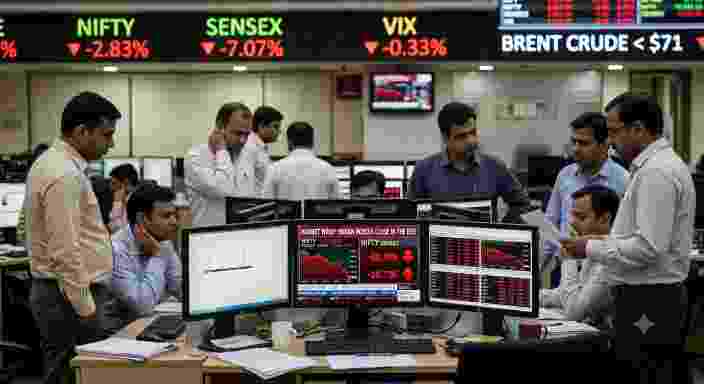
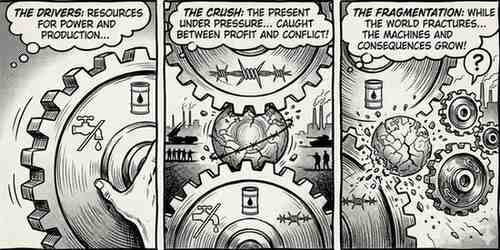
Global conflict risk is rising not due to isolated flashpoints but because of converging structural pressures: weakening multilateral institutions, intensifying resource competition, and the fragmentation of Cold War-era security architectures. These systemic vulnerabilities have created conditions where regional disputes now carry unprecedented escalation potential, with direct implications for energy security, supply chains, and sovereign debt markets worldwide.
New Delhi, April 2025 — The probability of major interstate conflict has reached its highest level since 1945, according to multiple geopolitical risk indices, driven by a fundamental restructuring of global power dynamics rather than any single crisis. This structural shift demands that policymakers and investors recalibrate assumptions built during three decades of relative great-power stability.
What Is Driving the Rise in Global Conflict Risk?
The erosion of multilateral conflict-resolution mechanisms stands as the primary accelerant of global instability. United Nations Security Council effectiveness has declined sharply since 2022, with veto usage reaching record levels and peacekeeping budgets facing sustained pressure from major contributors. The parallel weakening of arms control frameworks—including the collapse of the Intermediate-Range Nuclear Forces Treaty and uncertainty surrounding New START—has removed guardrails that previously constrained military competition. Resource nationalism, particularly around critical minerals essential for energy transition technologies, has introduced new flashpoints in regions previously considered geopolitically stable.
What Does This Mean for India?
India faces heightened exposure on multiple fronts as global conflict risk intensifies. The unresolved Line of Actual Control situation with China, combined with Beijing’s expanding naval presence in the Indian Ocean, creates persistent security overhead that constrains defence budget flexibility. Indian energy security remains vulnerable to disruptions in West Asian sea lanes, with approximately 85 percent of crude imports transiting through potentially contested waters. However, India’s growing defence manufacturing capability and strategic partnerships with both Western and Gulf nations position it as a potential beneficiary of supply chain diversification away from conflict-prone regions.
How Does This Compare to Previous Periods of Elevated Risk?
The current environment differs fundamentally from Cold War-era tensions and the post-9/11 period. Cold War bipolarity created predictable escalation ladders and established communication channels between adversaries. The present multipolar disorder lacks equivalent stabilisation mechanisms, with middle powers increasingly pursuing independent security arrangements. The last comparable period of structural uncertainty occurred during the interwar years of 1919-1939, when institutional frameworks failed to accommodate rising powers—a historical parallel that informs current strategic assessments.
- Global defence spending reached $2.4 trillion in 2024, the highest inflation-adjusted figure since 1988
- UN Security Council vetoes increased 340 percent between 2020 and 2024 compared to the previous five-year period
- Maritime territorial disputes now affect 23 percent of global shipping lanes by volume
- Sovereign conflict insurance premiums have risen 180 percent since 2022 for emerging market issuers
- Critical mineral supply concentration means 67 percent of rare earth processing occurs in geopolitically sensitive jurisdictions
What Should Investors and Policymakers Watch?
Defence and aerospace sectors across allied nations are experiencing sustained capital inflows as governments prioritise indigenous manufacturing capability. Supply chain resilience has become a board-level concern for multinationals, with nearshoring and friendshoring strategies accelerating despite cost implications. Sovereign credit analysts are increasingly incorporating geopolitical risk premiums into emerging market debt valuations, particularly for nations dependent on contested trade corridors.
Analyst’s View
The structural drivers of global conflict risk show no signs of reversal in the near term. Investors should monitor three leading indicators: frequency of military-to-military communication channel usage between major powers, critical mineral stockpiling patterns among industrial economies, and defence budget trajectories in middle-power nations. India’s strategic positioning—geographically central, militarily capable, and diplomatically flexible—offers both defensive resilience and offensive opportunity in portfolio construction. The premium for geopolitical stability will likely persist through the decade, favouring assets in jurisdictions with credible security architectures and diversified trade relationships.