India’s Energy Shield: Navigating the Global Supply Storm
- Editor
- March 23, 2026
- Business, Companies & Industry, economic, Global Business
- 0 Comments
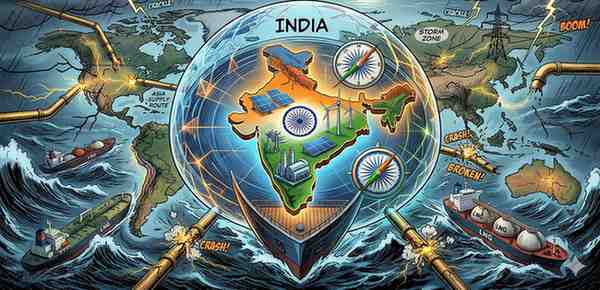
NEW DELHI, March 23, 2026 — As tensions in the Persian Gulf push global energy markets to the brink, India has moved with “war-room” precision to insulate its economy. By aggressively diversifying its supply chain and recalibrating domestic distribution, New Delhi is attempting to break a decades-long vulnerability to Middle Eastern chokepoints.
What officials are calling a “Strategic Energy Reset” is a multi-pronged offensive to ensure that Indian kitchens and businesses remain powered, even as the Strait of Hormuz remains a high-risk zone.
The U.S. LPG Deal: Breaking the Middle East Monopoly
In a landmark move to de-risk its fuel supply, India has finalized a massive one-year contract with American suppliers to import Liquefied Petroleum Gas (LPG). This deal marks a significant departure from India’s historical reliance on the “Big Three” of the Gulf: Qatar, the UAE, and Saudi Arabia.
- Diversification Goal: The deal secures 10% of India’s annual LPG requirement from U.S. soil.
- The Rationale: Traditionally, over 80% of India’s gas imports have flowed through the Strait of Hormuz. By sourcing millions of tonnes from the Atlantic, India is effectively creating a “safety bypass” for its energy needs.
- Price Protection: Leveraging U.S. shale gas helps New Delhi hedge against the “war premiums” currently being added to Middle Eastern shipments.
Commercial Relief: Saving the Hospitality Sector
For weeks, small businesses and the restaurant industry bore the brunt of supply constraints as the government prioritized residential “blue cylinders.” Today, that pressure eased as the Ministry of Petroleum announced a 50% increase in commercial LPG allocation.
This surge in supply allows the hospitality sector—which contributes significantly to urban employment—to resume normal operations. Government officials noted that by stabilizing residential reserves through the U.S. deal, they can now funnel more fuel into the commercial ecosystem to prevent a spike in food inflation and service costs.
The Russia Pivot: A “Free Trade” Energy Corridor
While the West remains entangled in geopolitical standoffs, India is doubling down on its partnership with Moscow. High-level discussions for a Comprehensive Free Trade Agreement (FTA) with Russia are now centering almost entirely on a permanent energy corridor.
- Steady Crude Flow: The proposed deal aims to lock in long-term, discounted oil prices, shielding India from the daily volatility of Brent crude.
- Logistics Shift: By shifting more trade to the International North-South Transport Corridor (INSTC), India seeks to bypass the Persian Gulf entirely for a portion of its imports, ensuring that Russian barrels reach Indian refineries regardless of the situation in Hormuz.
Strategic Outlook: The New Energy Map
| Pillar | Action | Objective |
| Westward Shift | 10% LPG from USA | Reduce 80% Middle East dependency. |
| Domestic Focus | 50% Commercial Increase | Restore restaurant and SME operations. |
| Northern Alliance | Russia Free Trade Deal | Secure long-term, discounted crude oil. |
Bottom Line
New Delhi is no longer content to be a passive victim of Middle Eastern instability. By leveraging its position as a top-tier global consumer, India is remapping the world’s energy geography. The message is clear: whether the Strait of Hormuz opens or stays closed, India’s energy security will no longer be held hostage by a single region’s volatility.