Strategic Retreat? US Moves Mine-Hunting Ships Away from Strait of Hormuz as Allies Stay Out
- Editor
- March 20, 2026
- Uncategorized
- 0 Comments
Singapore, March 20, 2026 — In a move that has raised sharp questions about the Western naval strategy in West Asia, the United States Navy has repositioned its critical mine-hunting combat ships away from the Strait of Hormuz. The USS Tulsa and USS Santa Barbara, two specialized Independence-class Littoral Combat Ships, were spotted docked in Singapore on March 18th—over 3,000 miles away from the vital energy chokepoint they were assigned to protect.
The “Safe Distance” Shift
While U.S. authorities have characterized the movement as a “scheduled maintenance stop,” the timing and distance suggest a calculated strategic retreat. These vessels are the primary defense against sea mines, equipped with advanced sonar, unmanned surface vehicles, and MH-60S Seahawk helicopters designed to detect and neutralize underwater threats.
Experts suggest the relocation is a precautionary measure to protect high-value assets. Bahrain, the traditional hub for these operations, currently sits well within the strike range of Iranian long-range missiles and kamikaze drones. With U.S. military installations in Manama facing multiple attacks since late February, the Navy appears to be pulling its “glass jaw” assets out of the direct line of fire.
The Alliance Fracture
The repositioning follows a series of diplomatic setbacks for Washington. Despite repeated requests for a unified front to secure maritime routes, key European and Asian allies have flatly refused to expand their missions:
- The European Union: The EU rejected expanding its naval mission, Aspides, into the Strait. Officials cited a lack of “appetite for war” and a preference for focusing on the Red Sea.
- The United Kingdom: Prime Minister Keir Starmer indicated that committing additional Royal Navy forces would be “challenging,” effectively leaving the U.S. to police the region alone.
Trump’s Taunt: “Non-Responsive Allies”
The lack of international support has drawn a sharp response from U.S. President Donald Trump. On March 17th, he suggested that the U.S. should stop being the world’s maritime police for a waterway used primarily by other nations. He noted that if the U.S. “finished off” what remains of the threat and left other countries responsible for their own energy security, it might “get some of our non-responsive allies in gear.”
The Economic Toll
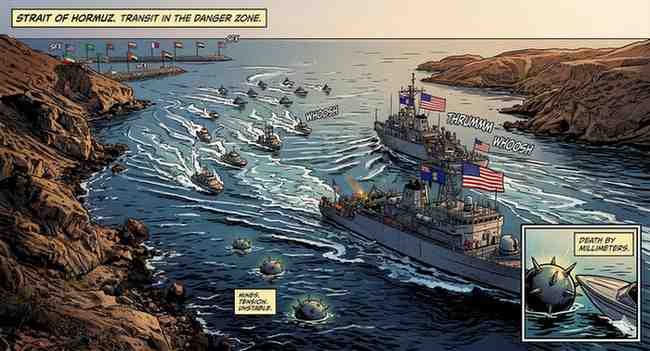
As military assets pull back, the private sector is effectively grounded. Insurance companies have hiked premiums to prohibitive levels, and ship captains are refusing to risk their crews in the mine-laden waters without clear protection. With no viable plan to reopen the Strait, the global economy faces a prolonged spike in energy and food costs, hitting the “cost of living” crisis at its core.
Bottom Line The U.S. repositioning to Singapore highlights a growing isolation in Washington’s West Asia policy. Without a unified naval coalition, the Strait of Hormuz remains a “dangerous situation” that nobody is currently willing to police, leaving the world’s most critical energy artery in a state of perilous uncertainty.