The End of the “Invisible” Workforce: India’s Mandate for Gig Worker Security
- Editor
- February 18, 2026
- breaking news, Development, Economy, India, New Delhi
- 0 Comments
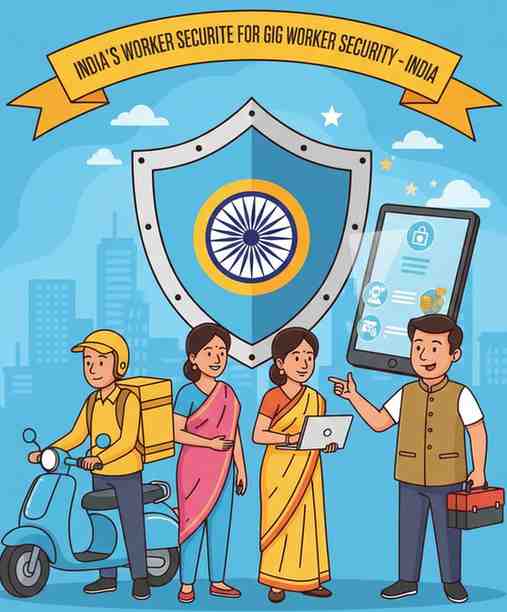
New Delhi, February 2026 — In a historic regulatory shift, the Indian government has moved to operationalize the social security framework for the nation’s gig economy. For years, delivery partners and ride-hailing drivers existed in a legal grey area—classified as “partners” but denied the benefits of “employees.” That era is officially coming to a close.
The new mandate for the National Pension System (NPS) and insurance coverage aims to provide a safety net for millions who work for platforms like Zomato, Swiggy, and Uber, ensuring they aren’t left behind by the digital revolution.
The 1–2% Rule: Who Pays for the Safety Net?
The backbone of this reform is a new financing model that avoids traditional payroll taxes. Instead, the government has introduced a Turnover-Based Contribution:
- The Levy: Digital aggregators are now required to contribute between 1% and 2% of their annual turnover to a dedicated social security fund.
- The Cap: To protect the business model of these platforms, the government has capped this contribution at 5% of the total amount paid to the workers in a year.
- The Intent: This ensures that as these companies grow their massive revenues, a small slice is automatically diverted toward the welfare of the people on the ground making those revenues possible.
Benefits: From Health Insurance to Retirement
The fund isn’t just a pot of money; it’s a structured insurance and savings ecosystem designed for workers who don’t have a fixed monthly salary. The benefits include:
- NPS & Pensions: Gig workers will finally have a pathway to retirement through the National Pension System.
- Health & Accident Cover: The fund will cover medical emergencies and accidental insurance—a critical requirement for delivery agents who face high risks on Indian roads every day.
- Social Security: This marks the first time that “flexible” work in India is being coupled with “fixed” security, moving away from the “use and throw” perception of gig labor.
The Gig Economy Paradox: Flexibility vs. Vulnerability
For a long time, the gig economy was celebrated for its “flexibility”—the ability to log in and out whenever one wanted. However, this flexibility often masked a lack of stability.
- Zero Benefits: Until now, a Zomato delivery partner or an Uber driver had no access to sick leave, health insurance, or a pension plan. If they didn’t work, they didn’t earn, and if they got injured, they were on their own.
- The Government’s Stance: By making these contributions mandatory, the state is acknowledging that “independence” should not mean “vulnerability.”
Can the Platforms Handle the Cost?
Industry insiders are already weighing the impact of these rules on the bottom line. With food delivery and ride-hailing platforms already operating on thin margins, critics argue that these costs might eventually be passed down to the consumer.
- Platform Pressure: While 1-2% of turnover sounds small, for companies burning cash to acquire users, it adds a significant layer of operational cost.
- A Necessary Reset: Supporters argue that if a business model relies on keeping its workforce in poverty or without security to be “profitable,” then that model was flawed to begin with.
Bottom Line
The mandate for gig worker social security is a “reset” for the Indian digital market. It shifts the burden of welfare from the individual back to the multi-billion-dollar corporations that facilitate the work. The message is clear: the future of work in India can be digital, but it must also be decent.