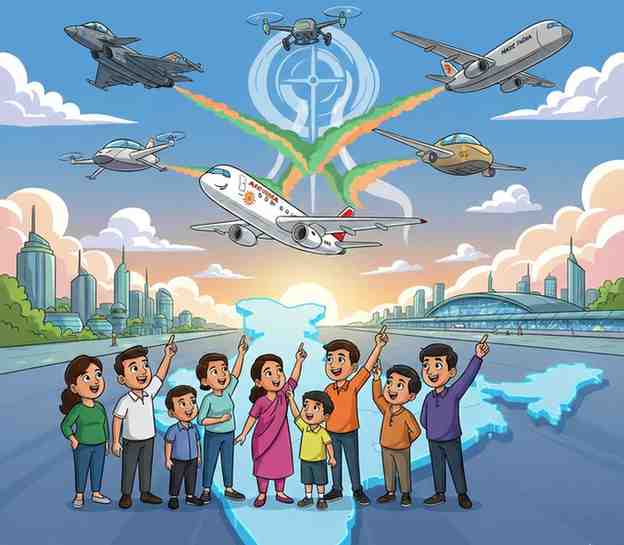
India’s Aviation Vision 2047: Building 50 New Airports in the Next 5 Years
- Editor
- February 16, 2026
- Deals, Development, India
- 0 Comments
New Delhi, February 16, 2026 — India is officially the world’s third-largest domestic aviation market, and the government is doubling down on this momentum. Union Civil Aviation Minister K. Ram Mohan Naidu recently announced a high-velocity expansion plan to build 50 new airports across the country over the next five years.
This move is part of the broader “Viksit Bharat 2047” vision, which aims to take India’s total airport count from the current 165 to nearly 350 by the year 2047.
A New Airport or Terminal Every 33 Days
The sheer speed of India’s aviation growth is unprecedented. According to the Ministry, India is currently inaugurating a new airport or a significant terminal facility approximately every 33 days.
The Decadal Leap:
- 2014: 74 operational airports.
- 2026: 165 operational airports.
- 2031 (Target): 215+ operational airports.
- 2047 (Target): 350-400 operational airports.
To support this infrastructure, Indian airlines have placed record-breaking orders for nearly 1,700 aircraft, ensuring that as soon as the runways are ready, the planes are available to fly.
Connecting the Heartland: The UDAN & Tier-2/3 Strategy
The core objective of this expansion is to “democratize” air travel. The government’s UDAN (Ude Desh ka Aam Nagrik) scheme is the primary driver, focusing on connecting underserved and unserved regions in Tier-2 and Tier-3 cities.
Strategic Impact:
- Economic Scaffolding: Minister Naidu described airports as the “scaffolding” for the real estate and commerce sectors. For instance, the upcoming Noida International Airport has already triggered an 8-10x surge in regional real estate activity before its first flight.
- New Regional Players: To prevent market monopolies, the Ministry recently granted No Objection Certificates (NOCs) to new regional airlines like Shankh Air, Al Hind Air, and FlyExpress, specifically to service these new regional routes.
Major Projects on the Horizon
Several “mega-airports” are reaching critical milestones in 2026:
- Noida International Airport (Jewar): Set to begin commercial operations in early 2026, it will eventually become India’s largest airport.
- Navi Mumbai International Airport: Expected to decongest the Mumbai metropolitan region significantly.
- Purandhar (Pune): A massive greenfield project planned to replace the restricted Lohegaon Air Force base for international travel.
- Regional Hubs: New facilities are being fast-tracked in cities like Purnea (Bihar), Thoothukudi (Tamil Nadu), and Guwahati (Assam), where India’s first nature-themed terminal recently opened.
Infrastructure Meets Modernization
The 50-airport plan isn’t just about runways. The Ministry is focusing on:
- Public-Private Partnerships (PPP): Following the success of Delhi and Mumbai, 11 more state-owned airports (including Indore, Varanasi, and Raipur) are being leased to private players for 50-year periods to improve passenger amenities.
- Height Restriction Reform: The government has engaged the ICAO to study and potentially relax building height restrictions near airports in metros like Mumbai and Chennai, allowing cities to grow vertically while maintaining safety.
- Multimodal Hubs: Integrating airports with Gati Shakti projects, ensuring seamless connectivity between flights, high-speed rail, and expressways.
Bottom Line
The Ministry’s plan is a clear signal that air travel is no longer a luxury in India—it is a mass transit necessity. By building 50 airports in five years, the government is betting that connectivity will be the single largest catalyst for transforming regional towns into global economic hubs.