New Delhi, February 2026 — India Launches “Bharat Containers” to Break Global Shipping Monopoly
- Editor
- February 14, 2026
- Business, Global Business
- 0 Comments
In a decisive strike for economic sovereignty, the Indian government has officially incorporated Bharat Containers, a state-backed powerhouse designed to end the country’s humiliating dependence on foreign shipping lines.
With a massive $6.9 billion (₹59,000 crore) investment, the move aims to dismantle a status quo where global giants—mostly Chinese and European—control the flow of Indian goods.
The “99% Trap”: India’s Hidden Trade Vulnerability
For decades, India has been a maritime giant with feet of clay. While the nation’s trade volumes have soared, nearly 99% of its ocean freight is currently carried by foreign-flagged vessels and containers.
This reliance has left Indian exporters at the mercy of:
- Volatile Freight Rates: Global shipping cartels often hike prices during peak seasons, eating into the margins of small Indian businesses.
- Container Famines: During global disruptions, empty containers are often diverted to high-paying routes like China-US, leaving Indian ports stranded.
- Capital Outflow: Billions of dollars in freight charges exit the Indian economy every year, fueling the maritime infrastructure of rival nations.
Building the Fleet: 51 Ships to Lead the Charge
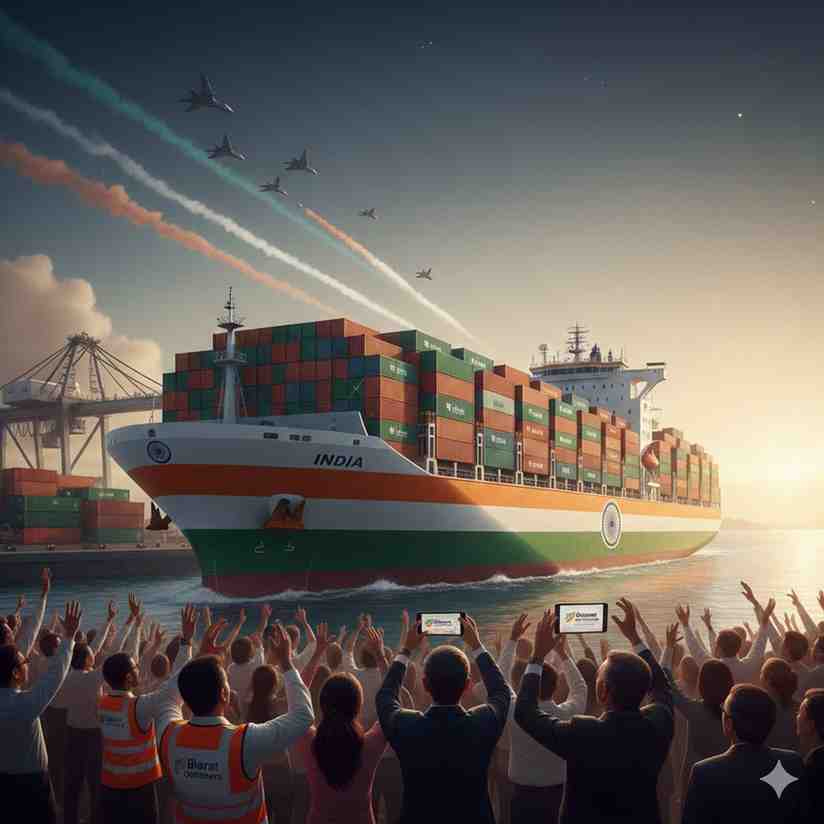
The centerpiece of this initiative is the ambitious plan to build and operate a fleet of 51 modern container vessels.
Unlike previous incremental steps, Bharat Containers is designed for scale. By owning the ships, India gains the “right of way” in international waters, ensuring that Indian exports—from textiles to electronics—are never left waiting on a dock because a foreign carrier prioritized a different client.
Ending the “Made in China” Box Dominance
A shipping line is only as good as the boxes it carries. Currently, China manufactures over 90% of the world’s shipping containers. Bharat Containers aims to flip this script by establishing a domestic manufacturing ecosystem capable of producing 1 million TEU (Twenty-foot Equivalent Unit) containers.+1
By manufacturing these “steel LEGOs” in India, the government expects to:
- Reduce Logistics Costs: Direct savings of 15% to 20% on freight are projected as middleman margins are eliminated.
- Create Industrial Jobs: From steel fabrication to high-tech tracking systems, the manufacturing hubs will generate thousands of specialized roles.
A Strategic Shield Against Global Shocks
The timing of the launch is no coincidence. In an era of geopolitical instability and “weaponized” supply chains, the Indian government views Bharat Containers as a strategic necessity rather than just a commercial venture.
By controlling the “vessels and the valves” of trade, India can ensure that its $2 trillion export target for 2030 remains insulated from external pressures or diplomatic arm-twisting in the high seas.
The Bottom Line: Trade on Indian Terms
The era of India being a passive passenger in the global shipping industry is ending. Bharat Containers represents a shift from being a “consumer” of logistics to a “provider” of it.
While the $6.9 billion price tag is steep, the cost of doing nothing—remaining dependent on foreign containers that could be withdrawn at any moment—was far higher. With this move, “Atmanirbhar Bharat” moves from a slogan on a poster to a fleet of ships on the horizon.