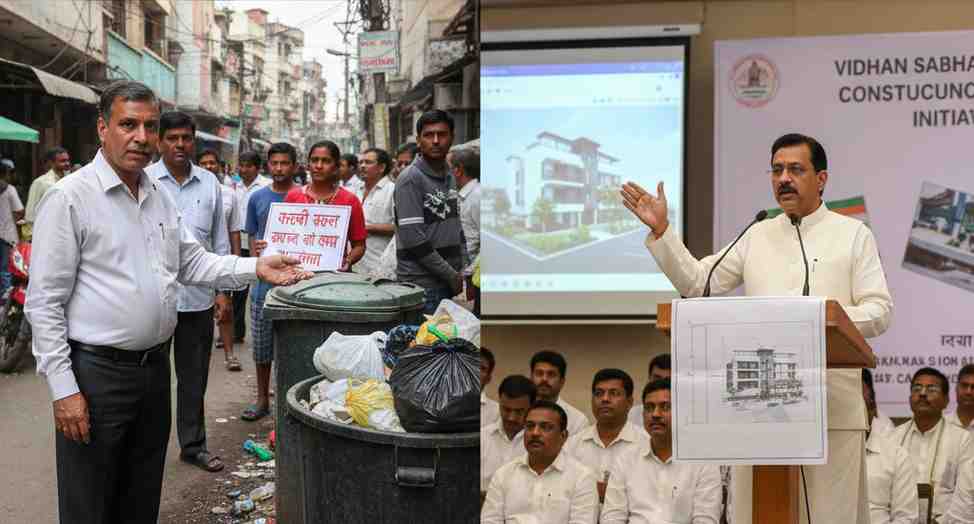
Ward Councillor vs MLA: Who Solves What Problems
Key highlights
- A Ward Councillor is your frontline for municipal services; an MLA is your voice inside the state’s lawmaking + budget machinery. India Code
- Municipal powers and functions flow through the constitutional framework for municipalities and state legislation. India Code
- The fastest fix usually comes from the office that controls the contractor, not the office with the bigger poster.
The simple difference
Ward Councillor: elected representative in the city’s local body—street-level governance.
MLA: elected representative in the State Legislative Assembly—state-level law, budgets, and oversight.
The Constitution’s municipalities framework (Part IXA) is the backbone for how urban local bodies are empowered to manage civic functions. India Code
Who to go to for common issues?
Go to your Councillor for:
- Garbage collection issues
- Drains, potholes, local streetlights
- Local park maintenance
- Local sanitation and ward-level civic complaints
Go to your MLA for:
- Bigger road projects, policy-level issues, state schemes
- Escalation when departments aren’t moving
- Issues needing coordination across multiple departments
Small question people often search: Can an MLA order the municipal staff?
Usually, no direct chain. Influence exists—but operational control often sits with the municipal system. That’s why councillor + municipal grievance routes are often faster.
A practical “who fixes it” rule
Ask one question: Who controls the budget line and contractor for this problem?
If it’s local civic work, it’s usually municipal. If it’s state infrastructure/scheme implementation, MLA escalation makes more sense.