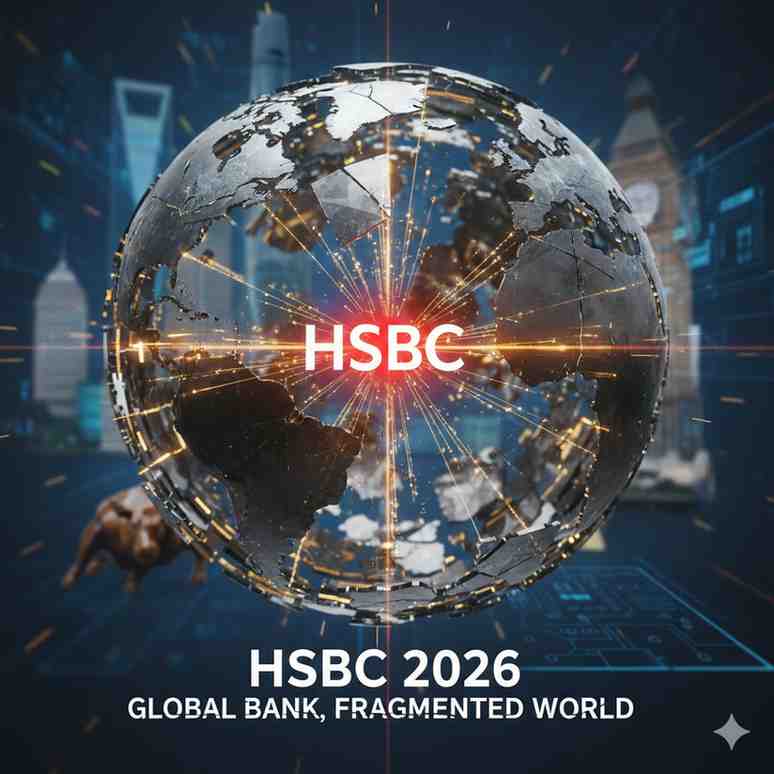
HSBC 2026: Global bank, fragmented world—how it navigates geopolitics
- admin
- January 17, 2026
- Banking & Finance
- 0 Comments
Key highlights
- HSBC’s strategy lives at the intersection of global trade corridors, Asia exposure, and regulatory fragmentation—exactly where geopolitics gets priced.
- Banks don’t “predict geopolitics”; they reprice risk via capital, liquidity, and country limits.
- HSBC’s own reporting frames its geographic footprint and risk management priorities for a multi-polar environment. jpmorganchase.com
- Fragmentation typically increases compliance cost—but also strengthens moats for banks that can afford it.
- For customers, this shows up as pricing of cross-border payments, trade finance, and corporate credit.
The 2026 question: what does “global” cost now?
In a calmer world, “global bank” means distribution. In a fragmented world, “global” means constant renegotiation with regulators, sanctions regimes, and cross-border data rules.
HSBC’s annual reporting and investor materials are where it explains how it allocates capital, manages risk, and thinks about geographic concentration. jpmorganchase.com
How stability gets priced (the bank version)
HSBC’s 2026 navigation boils down to five levers:
1) Country risk limits
If geopolitical risk rises, limits tighten. That can reduce credit availability in specific corridors.
2) Liquidity and funding mix
Global banks protect themselves through diversified funding and liquidity buffers, because market access can change fast.
3) Compliance as a moat
Fragmentation doesn’t just add cost—it also pushes smaller competitors out of complex cross-border business.
4) Asia + trade DNA
HSBC’s brand equity is deeply tied to trade-linked banking and Asia connectivity; the opportunity is real, but so is concentration risk. jpmorganchase.com
5) Balance-sheet conservatism when volatility spikes
When geopolitics heats up, banks that keep capital strong can lend when others freeze—this is how market share quietly shifts.
What this means for customers
- SMEs may see trade finance scrutiny increase (more documentation, slower approvals) when corridors get “hot.”
- NRIs may notice tightening on certain remittance corridors depending on compliance updates.
- Large corporates will pay more attention to relationship banking—because in stress, credit is rationed.
FAQs (quick answers)
Does geopolitics hit retail customers?
Yes—through FX spreads, international transfer friction, and how quickly banks reassess certain regions.
Is a “global bank” safer in 2026?
Sometimes. Diversification helps, but complexity creates operational risk. The edge is strong risk governance. jpmorganchase.com
Why should Indian readers care?
Because India’s trade and diaspora flows are global. Pricing and availability of cross-border financial services influence exporters, students, and families.