Lucknow’s Lament: Is the City Losing Its Heritage to Urbanization?
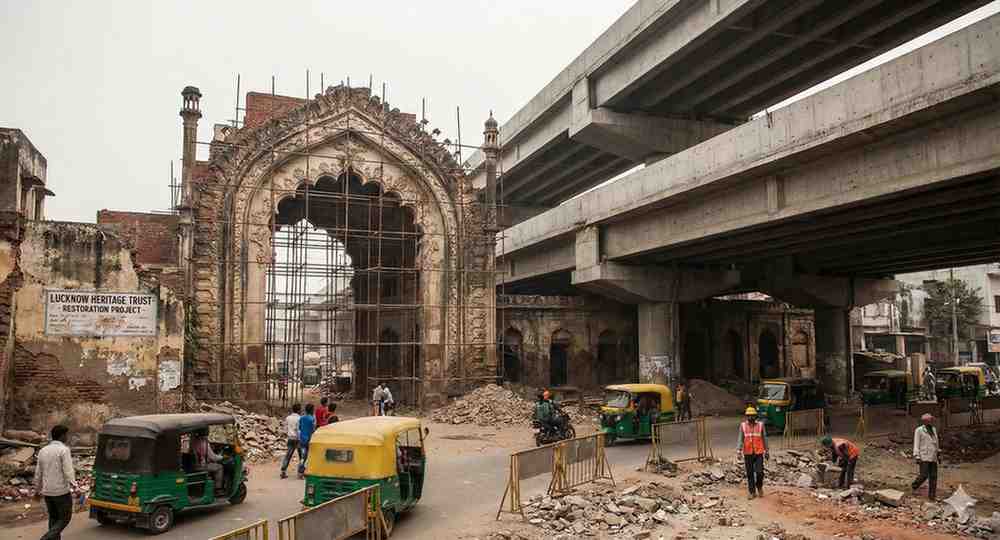
Lucknow, 2025 – Often celebrated as the City of Nawabs, Lucknow is synonymous with cultural richness, intricate architecture, and a legacy that spans centuries. However, the city’s identity is increasingly at risk as rapid urbanization alters its historic landscape. Rising population pressures and infrastructure projects are leaving a significant mark on the city’s heritage.
The Intersection of Heritage and Urban Development
Lucknow’s essence is rooted in its architectural heritage, blending Mughal, Nawabi, and British influences. Iconic structures such as the Bara Imambara, Rumi Darwaza, and the Residency represent its historical depth. Yet, data from the Archaeological Survey of India (ASI) and conservationists suggest that urban expansion is encroaching upon these cultural landmarks, threatening their structural integrity and aesthetic appeal.
The Uttar Pradesh Urban Development Authority recently announced plans to build high-rise housing and expressways to support the city’s growing population. While these projects aim to meet modern needs, they have ignited debates about the preservation of heritage zones, with concerns over visual and environmental disruptions.
Government Strategies for Heritage Conservation
Recognizing the need for balance, the Uttar Pradesh government has implemented initiatives to protect Lucknow’s historical sites. A key measure is the ‘Heritage Policy for Urban Development,’ which imposes strict guidelines for new construction near protected areas. This policy aims to mitigate the adverse effects of urbanization on the city’s cultural landmarks.
Additionally, ₹100 crore has been allocated under the ‘Smart Cities Mission’ to harmonize urban development with heritage preservation. Chief Minister Yogi Adityanath recently reaffirmed the state’s commitment, stating, “Lucknow’s heritage is its heart. Our goal is to ensure development complements, rather than competes with, our cultural identity.”
Barriers to Implementation
Despite these initiatives, the road to effective implementation is fraught with challenges. Conservationists emphasize that heritage zones such as Chowk and Hazratganj are grappling with illegal construction and unchecked commercialization. Residents frequently voice frustration over insufficient enforcement and delays in restoration projects.
A report by the Indian National Trust for Art and Cultural Heritage (INTACH) reveals that over 30% of Lucknow’s heritage buildings are in a state of disrepair. The report advocates for Public-Private Partnership (PPP) models to accelerate conservation efforts, combining resources from both governmental and private entities.
Public Perspectives on the Crisis
The preservation-versus-progress debate has elicited diverse opinions among Lucknow’s residents. For many, the erosion of heritage signifies a loss of identity. “Our old city is losing its character to modern infrastructure. We need to protect its uniqueness,” says Raghav Tiwari, a local historian.
Conversely, some younger residents view urbanization as essential for economic and social advancement. “We can’t stop modernization,” remarks Ananya Sharma, an urban planner. “The challenge lies in integrating old-world charm with contemporary needs.”
Looking Forward: The Path to Sustainability
Experts suggest that Lucknow’s future hinges on the government’s ability to align development with heritage preservation. Key recommendations include:
- Digitization of Heritage Records: Establishing detailed digital archives to safeguard historical data and facilitate restoration.
- Community Engagement: Involving citizens and local organizations in conservation efforts to foster shared responsibility.
- Sustainable Planning Practices: Promoting eco-friendly architecture and integrating green spaces within urban projects near heritage sites.
Lucknow’s struggle encapsulates a broader national challenge of balancing historical preservation with modern growth. Its success or failure in achieving this balance will serve as a model for other cities navigating similar dilemmas.
References:
- Archaeological Survey of India (ASI)
- Uttar Pradesh Urban Development Authority
- Indian National Trust for Art and Cultural Heritage (INTACH)
- Official Statements from the Chief Minister’s Office