Understanding the Vedic Concept of the Universe: Are We Open to Learning?
Exploring Ancient Cosmology in Modern Times
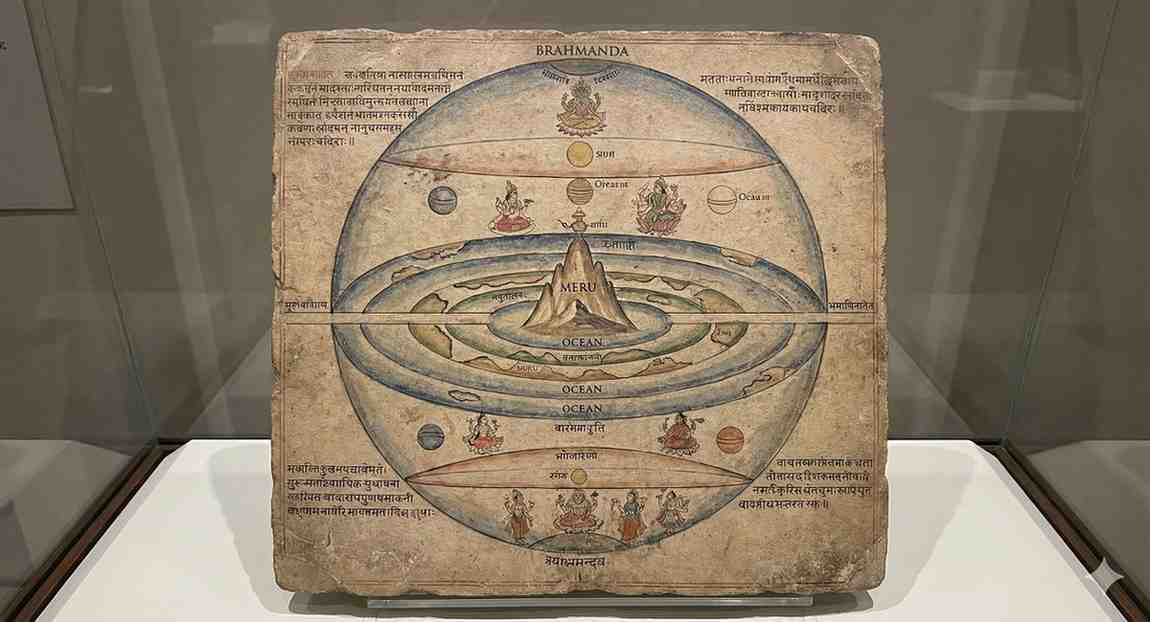
The Vedas offer a rich, nuanced perspective on the universe, blending cosmological insights with spiritual wisdom. This ancient understanding presents the cosmos not just as a physical space but as a complex interplay of energy, matter, and consciousness. As modern science advances our knowledge of the universe, the question arises: Are we open to integrating these ancient Vedic concepts into our understanding, or do we view them as mere relics of the past?
1. The Vedic Universe: A Holistic View
The Vedas depict the universe as an infinite, cyclic entity governed by natural laws and divine energy. This worldview encapsulates not only the physical dimensions but also the spiritual and metaphysical aspects.
- Cyclic Nature of the Cosmos: The concept of yugas (great ages) and the cyclic creation and dissolution (pralaya) reflect a universe in constant motion, mirroring modern theories like the oscillating universe model.
- Interconnectedness: The Vedic universe is seen as an interconnected web where the material (Prakriti) and the spiritual (Purusha) coexist and interact, suggesting a sophisticated understanding of dualism that resonates with certain interpretations of quantum physics.
2. Modern Reception of Vedic Cosmology
Despite its depth, the Vedic cosmology often faces skepticism in educational and scientific circles dominated by empirical standards.
- Educational Systems: Curricula tend to prioritize Western scientific models, with Vedic concepts introduced, if at all, only in comparative religion or philosophy courses.
- Scientific Community: While there is growing interest in non-Western knowledge systems, the integration of Vedic ideas into mainstream science remains minimal.
3. Challenges and Opportunities
The primary challenge lies in bridging the gap between the empirical demands of modern science and the metaphysical nature of Vedic cosmology.
- Language and Metaphor: Vedic texts use poetic, symbolic language that can be challenging to translate into empirical science’s precise terms.
- Validation and Interpretation: Aligning metaphysical concepts with empirical evidence requires innovative approaches and open-mindedness from both traditional scholars and modern scientists.
4. The Path Forward: Integration and Dialogue
Encouraging a dialogue between Vedic scholars and modern scientists could lead to a richer, more integrated understanding of the universe.
- Interdisciplinary Studies: Programs that encourage the study of Vedic texts alongside scientific disciplines could foster new insights into cosmology and metaphysics.
- Conferences and Symposia: Regular interactions between experts in Vedic knowledge and modern cosmology could help demystify ancient texts and explore their relevance in contemporary science.
Conclusion: Embracing a Broader Worldview
As humanity continues to explore the vast mysteries of the universe, the wisdom of the Vedas offers valuable insights that could expand our current paradigms. Whether we are open to incorporating these ancient perspectives may well determine the breadth and depth of our cosmic understanding. In the spirit of true knowledge-seeking, being open to the Vedic worldview not only honors our cultural heritage but also enriches our quest to understand the universe.