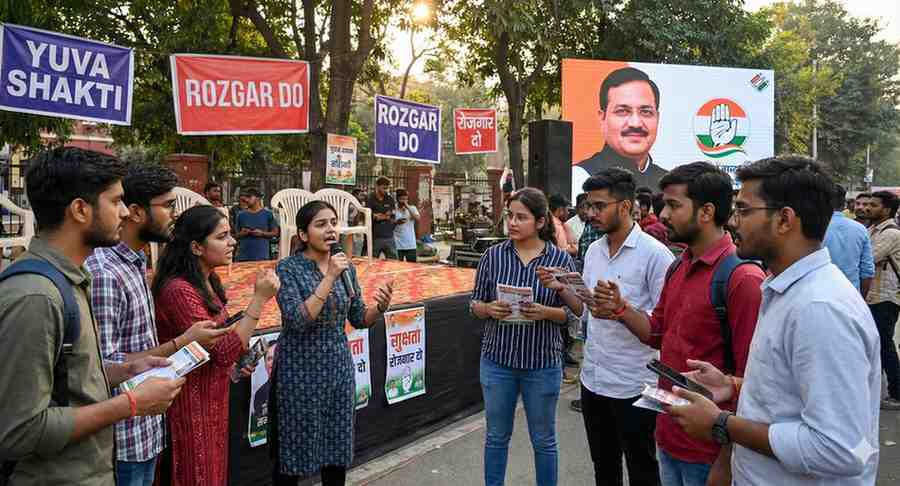
How Are Political Narratives Influencing Youth Engagement in Uttar Pradesh?
- admin
- December 22, 2025
- People, Politics, Uttar Pradesh
- 0 Comments
The Role of Political Narratives in Mobilizing a Demographic Majority
With nearly 60% of its population under the age of 30, Uttar Pradesh epitomizes the demographic dividend of India’s youthful electorate. This cohort, increasingly recognized as agents of socio-political change, occupies a pivotal position in shaping the state’s political dynamics. Political narratives targeting youth engagement reveal the intricate interplay of aspirations, discontent, and electoral strategies. However, the extent to which these narratives catalyze meaningful participation versus perpetuate tokenistic engagement remains contested.
Key Metrics
- Youth Population: Approximately 144 million, constituting 60% of Uttar Pradesh’s total population.
- Youth Unemployment Rate (Ages 15-29): 17.1% (Periodic Labour Force Survey, 2021-22).
- Higher Education Enrollment: Gross Enrollment Ratio of 26.3% (AISHE, 2020-21).
- Digital Penetration: Over 70 million smartphone users, enabling unprecedented connectivity for political outreach.
Crafting Narratives for the Youth: Themes and Strategies
Political parties in Uttar Pradesh increasingly design narratives to resonate with the evolving aspirations of the youth. These strategies span multiple domains:
- Employment and Skill Development: Central to campaign rhetoric are promises of job creation, vocational training, and entrepreneurial incentives. Programs like “One District, One Product” have been framed as emblematic solutions to the state’s unemployment crisis.
- Educational Reforms: Political platforms emphasize improved infrastructure for schools and universities, alongside digital literacy drives aimed at bridging rural-urban disparities.
- Identity Politics and Representation: Narratives often intertwine caste, religion, and regional identities to consolidate youth voter bases, reflecting the state’s historically fragmented socio-political structure.
- Digital Engagement: Leveraging social media and digital campaigns, political entities target tech-savvy youth, crafting messages of accessibility, empowerment, and inclusivity.
The Divergent Impacts of Political Narratives
While these narratives have succeeded in drawing young voters into political discourse, their tangible outcomes remain uneven:
- Employment and Economic Promises: Persistent unemployment, particularly among educated youth, undermines the credibility of employment-centric campaigns.
- Education Policies: While digital education initiatives have broadened access, infrastructural deficits and inadequate teacher training continue to hinder transformative impact, especially in rural areas.
- Identity-Based Engagement: Caste and religion-oriented narratives, though effective in mobilizing voter blocs, often exacerbate socio-political polarization, detracting from developmental priorities.
- Digital Platforms: Social media has amplified political awareness among youth but has also been instrumental in disseminating misinformation and fostering divisive rhetoric.
Structural Challenges in Sustaining Youth Engagement
Despite targeted efforts, several systemic barriers impede the sustained engagement of Uttar Pradesh’s youth in governance and politics:
- Disillusionment with Leadership: Unmet promises and perceived inefficiencies in governance foster political apathy and disillusionment.
- Deficient Civic Education: The absence of widespread programs to inform youth about political rights and processes limits their capacity for informed participation.
- Short-Term Political Agendas: Campaigns often prioritize immediate electoral objectives over comprehensive, long-term developmental strategies, alienating critical segments of the youth demographic.
Recommendations for Harnessing Youth Potential
To ensure youth engagement translates into constructive political participation, policymakers and political parties must adopt a multi-faceted approach:
- Fulfillment of Commitments: Prioritize measurable outcomes in employment, education, and entrepreneurship to rebuild trust.
- Promotion of Civic Literacy: Establish programs that enhance political and civic education, empowering young voters to make informed decisions.
- Shift Towards Inclusive Narratives: Move beyond identity-based appeals to focus on shared aspirations and inclusive growth strategies.
- Ethical Digital Engagement: Use technology responsibly to promote informed discourse and counteract the spread of misinformation.
Conclusion: Narratives as Catalysts for Youth-Driven Change
The influence of political narratives on youth engagement in Uttar Pradesh underscores both the potential and pitfalls of contemporary electoral strategies. While these narratives have successfully mobilized a significant demographic, their long-term effectiveness will depend on the ability to deliver substantive change. By fostering transparency, inclusivity, and actionable commitments, political leaders can transform rhetoric into meaningful progress, empowering Uttar Pradesh’s youth to drive sustained socio-political transformation and set a precedent for national governance.